Introduction
Well‑characterised, patient‑derived glioma models capturing tumour cell states, disease progression and clinically relevant diversity
Glioma research demands models that reflect tumour heterogeneity, cellular state and disease progression. Our brain cancer portfolio enables researchers to:
- Interrogate glioblastoma heterogeneity and cell states using glioma stem cell models with deep molecular characterisation
- Compare clinically relevant disease contexts with patient‑derived models spanning primary and relapse glioblastoma
- Model tumour evolution and progression using IDHmutant glioma models representing low-grade disease state
All models are built by leading cancer experts and global institutes, with traceable origins – giving you confidence in research integrity and reproducibility.
Feature brain cancer models
Human | Glioblastoma stem-like models (IDH-wildtype)
Developed by Steven Pollard, Gillian Morrison (University of Edinburgh)
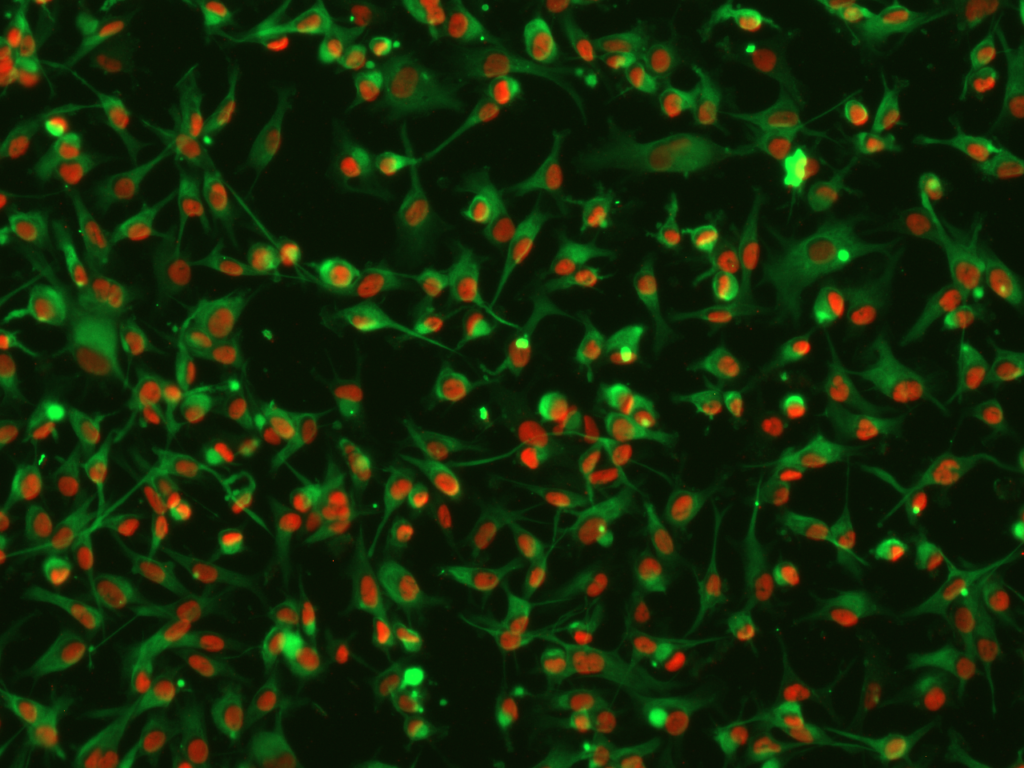
Interrogate glioblastoma heterogeneity and transcriptional cell states using deeply characterised, patient‑derived glioma stem cell models.
Key features
- Deep molecular characterisation including transcriptomic, genomic and DNA methylation profiling, capturing glioblastoma transcriptional states across established frameworks
- Patient‑derived glioma stem cell models that retain tumour heterogeneity and stem‑like characteristics
- Grown as adherent, laminin‑dependent monolayers, enabling consistent and scalable experimental workflows
Applications
- Compare treatment response across molecular subtypes
- Screen compounds and identify candidate hits in vitro and in vivo
- Investigate how stem‑like cell states influence tumour progression
Discover the GCGR cell lines
| Tool name | Cat. # | Inventor/ Institute | Organism | Key attributes |
|---|---|---|---|---|
| GCGR-E43 | 140075 | Steven Pollard, Gillian Morrison University of Edinburgh | Human | – Classical GBM line, – Part of a panel of patient-derived glioma stem cell lines |
| GCGR-E63 | 140084 | Steven Pollard, Gillian Morrison University of Edinburgh | Human | – Classical GBM line, – Part of a panel of patient-derived glioma stem cell lines |
| GCGR-E20 | 140061 | Steven Pollard, Gillian Morrison University of Edinburgh | Human | – Proneural GBM line, – Part of a panel of patient-derived glioma stem cell lines |
| GCGR-E53 | 140077 | Steven Pollard, Gillian Morrison University of Edinburgh | Human | – Proneural GBM line, – Part of a panel of patient-derived glioma stem cell lines |
| GCGR-E55 | 140079 | Steven Pollard, Gillian Morrison University of Edinburgh | Human | – Mesenchymal GBM line, – Part of a panel of patient-derived glioma stem cell lines |
| GCGR-E57 | 140081 | Steven Pollard, Gillian Morrison University of Edinburgh | Human | – Mesenchymal GBM line, – Part of a panel of patient-derived glioma stem cell lines |
Human | Glioma models (Heidelberg collection)
Developed by Christel Herold-Mende (University of Heidelberg)
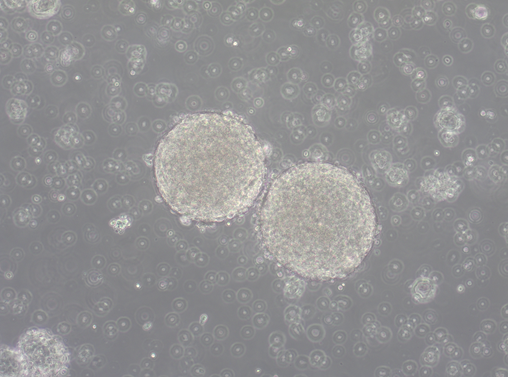
Model glioma initiation, progression, and transition to high‑grade disease using patient‑derived IDH‑mutant glioma stem‑like cell lines.
High-Grade Glioblastoma models (IDH-Wildtype)
Key features
- Derived from primary and relapsed WHO grade IV glioblastoma tumours
- Represents the major molecular subtypes and MGMT promoter states
- Models from both primary tumours and relapse models
Applications
- Model relapse and therapy resistance
- Compare treatment response across glioblastoma models and molecular subtypes
Discover the high grade glioblastoma models
| Tool name | Cat. # | Inventor/ Institute | Organism | Key attributes |
|---|---|---|---|---|
| NCH57 | 162334 | Christel Herold-Mende University of Heidelberg | Human | Rare Gliosarcoma model |
| NCH1425 | 162333 | Christel Herold-Mende University of Heidelberg | Human | Neurosphere models of Glioblastoma |
| NCH741f | 162332 | Christel Herold-Mende University of Heidelberg | Human | Neurosphere models of Glioblastoma |
| NCH711d | 162331 | Christel Herold-Mende University of Heidelberg | Human | Neurosphere models of Glioblastoma |
| NCH705 | 162330 | Christel Herold-Mende University of Heidelberg | Human | Neurosphere models of Glioblastoma |
| NCH669 | 162329 | Christel Herold-Mende University of Heidelberg | Human | Neurosphere models of Glioblastoma |
| NCH663 | 162328 | Christel Herold-Mende University of Heidelberg | Human | Neurosphere models of Glioblastoma |
| NCH660h | 162327 | Christel Herold-Mende University of Heidelberg | Human | Neurosphere models of Glioblastoma |
| NCH627 | 162326 | Christel Herold-Mende University of Heidelberg | Human | Neurosphere models of Glioblastoma |
| NCH601 | 162325 | Christel Herold-Mende University of Heidelberg | Human | Neurosphere models of Glioblastoma |
| NCH592b | 162324 | Christel Herold-Mende University of Heidelberg | Human | Neurosphere models of Glioblastoma |
| NCH588j | 162323 | Christel Herold-Mende University of Heidelberg | Human | Neurosphere models of Glioblastoma |
| NCH481 | 162322 | Christel Herold-Mende University of Heidelberg | Human | Neurosphere models of Glioblastoma |
| NCH465 | 162321 | Christel Herold-Mende University of Heidelberg | Human | Neurosphere models of Glioblastoma |
| NCH676 | 162320 | Christel Herold-Mende University of Heidelberg | Human | Adherent Glioblastoma models |
| NCH474 | 162319 | Christel Herold-Mende University of Heidelberg | Human | Adherent Glioblastoma models |
| NCH453 | 162318 | Christel Herold-Mende University of Heidelberg | Human | Adherent Glioblastoma models |
| NCH417 | 162317 | Christel Herold-Mende University of Heidelberg | Human | Adherent Glioblastoma models |
| NCH354 | 162316 | Christel Herold-Mende University of Heidelberg | Human | Adherent Glioblastoma models |
| NCH343 | 162315 | Christel Herold-Mende University of Heidelberg | Human | Adherent Glioblastoma models |
| NCH342 | 162314 | Christel Herold-Mende University of Heidelberg | Human | Adherent Glioblastoma models |
| NCH270 | 162313 | Christel Herold-Mende University of Heidelberg | Human | Adherent Glioblastoma models |
| NCH210 | 162312 | Christel Herold-Mende University of Heidelberg | Human | Adherent Glioblastoma models |
| NCH156 | 162311 | Christel Herold-Mende University of Heidelberg | Human | Adherent Glioblastoma models |
| NCH149 | 162310 | Christel Herold-Mende University of Heidelberg | Human | Adherent Glioblastoma models |
| NCH125 | 162309 | Christel Herold-Mende University of Heidelberg | Human | Adherent Glioblastoma models |
| NCH89 | 162308 | Christel Herold-Mende University of Heidelberg | Human | Adherent Glioblastoma models |
| NCH82 | 162306 | Christel Herold-Mende University of Heidelberg | Human | Adherent Glioblastoma models |
| NCH93 | 162305 | Christel Herold-Mende University of Heidelberg | Human | Rare Meningioma model with deleterious NF2 frameshift deletion, missense ALK and PTCH1 mutation |
Low grade glioma models (IDHmutant astrocytoma)
Key features
- Derived from astrocytoma relapse samples, reflecting tumour evolution from lower‑grade disease
- IDH‑mutant background with defined MGMT and BRAF status reported in primary tumours
- Maintained as neurosphere cultures under serum‑free conditions
Applications
- Model progression from low‑grade glioma
- Investigate how IDH mutation status shapes tumour biology
Discover the IDH mutant low grade cell lines
| Tool name | Cat. # | Inventor/ Institute | Organism | Key attributes |
|---|---|---|---|---|
| NCH3763 | 162307 | Christel Herold-Mende University of Heidelberg | Human | Low-grade Glioma models, IDHmutant Astrocytoma relapse models |
| NCH1681 | 162304 | Christel Herold-Mende University of Heidelberg | Human | Low-grade Glioma models, IDHmutant Astrocytoma relapse models |
| NCH645 | 162303 | Christel Herold-Mende University of Heidelberg | Human | Low-grade Glioma models, IDHmutant Astrocytoma relapse models |
| NCH620 | 162302 | Christel Herold-Mende University of Heidelberg | Human | Low-grade Glioma models, IDHmutant Astrocytoma relapse models |
| NCH551b | 162301 | Christel Herold-Mende University of Heidelberg | Human | Low-grade Glioma models, IDHmutant Astrocytoma relapse models |
Discover more brain cancer tools
| Tool name | Cat. # | Inventor/ Institute | Organism | Key attributes |
|---|---|---|---|---|
| NCH57 | 162334 | Christel Herold-Mende University of Heidelberg | Human | Rare Gliosarcoma model |
| NCH93 | 162305 | Christel Herold-Mende University of Heidelberg | Human | Rare Meningioma model with deleterious NF2 frameshift deletion, missense ALK and PTCH1 mutation |