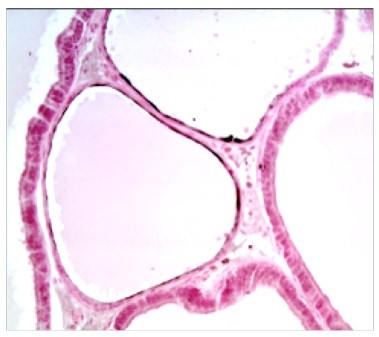
Cat. #153378
Anti-CEACAM1 (CD66a) [11-1H]
Cat. #: 153378
Sub-type: Primary antibody
Unit size: 100 ug
Availability: 1-2 weeks
Target: CEACAM1
Class: Monoclonal
Application: ELISA ; FACS ; IHC ; IF ; IP ; WB
Reactivity: Rat
Host: Mouse
£300.00
This fee is applicable only for non-profit organisations. If you are a for-profit organisation or a researcher working on commercially-sponsored academic research, you will need to contact our licensing team for a commercial use license.
Contributor
Inventor: Bernhard B. Singer
Institute: LeukoCom
Tool Details
*FOR RESEARCH USE ONLY (for other uses, please contact the licensing team)
- Name: Anti-CEACAM1 (CD66a) [11-1H]
- Alternate name: CD66, BGP 1, BGP, CD66a, Carcinoembryonic Antigen Related Cell Adhesion Molecule 1; CD66a Antigen; BGP1; BGP; Biliary Glycoprotein 1; Antigen CD66
- Research fields: Cancer;Cell biology
- Clone: [11-1H]
- Tool sub type: Primary antibody
- Class: Monoclonal
- Conjugation: Unconjugated
- Strain: Balb/c
- Reactivity: Rat
- Host: Mouse
- Application: ELISA ; FACS ; IHC ; IF ; IP ; WB
- Description: Carcinoembryonic antigen related cell adhesion molecules (CEACAM) (CD66a) belong to the immunoglobulin superfamily. They are highly glycosylated proteins with the typical N-terminal variable Ig-like domain followed by 0-6 constant Ig-like domains. A hydrophobic transmembrane domain with a cytoplasmic tail anchors CEACAM1 to the cell membrane. CEACAM1 is known as an epithelial tumour suppressor and an angiogenic growth factor.
- Immunogen: Recombinant soluble rat CEACAM1-Fc produced in HEK293 cells
- Isotype: IgG1 kappa
- Myeloma used: NS1/0
- Recommended controls: lysate from rat bladder cell line endogenously expressing ratCEACAM1
Target Details
- Target: CEACAM1
- Tissue cell line specificity: lysate from rat bladder cell line endogenously expressing ratCEACAM1
- Target background: Carcinoembryonic antigen related cell adhesion molecules (CEACAM) (CD66a) belong to the immunoglobulin superfamily. They are highly glycosylated proteins with the typical N-terminal variable Ig-like domain followed by 0-6 constant Ig-like domains. A hydrophobic transmembrane domain with a cytoplasmic tail anchors CEACAM1 to the cell membrane. CEACAM1 is known as an epithelial tumour suppressor and an angiogenic growth factor.
Applications
- Application: ELISA ; FACS ; IHC ; IF ; IP ; WB
Handling
- Format: Liquid
- Concentration: 1 mg/ml
- Unit size: 100 ug
- Storage buffer: PBS with 0.02% azide
- Storage conditions: -15° C to -25° C
- Shipping conditions: Shipping at 4° C
References
- Singer et al. 2005. Eur J Immunol. 35(6):1949-59. PMID: 15909305.
- CEACAM1 (CD66a) mediates delay of spontaneous and Fas ligand-induced apoptosis in granulocytes.
- Singer et al. 2000. Cancer Res. 60(5):1236-44. PMID: 10728682.
- The tumor growth-inhibiting cell adhesion molecule CEACAM1 (C-CAM) is differently expressed in proliferating and quiescent epithelial cells and regulates cell proliferation.