![Anti-TIGAR [M2-P4H2] - Image 2](https://cancertools.org/wp-content/uploads/4d6c83a5-03d9-48cd-86dc-3c357a0c06d5.jpg)
![Anti-TIGAR [M2-P4H2] - Image 3](https://cancertools.org/wp-content/uploads/6f4502f4-a528-47b3-b8c4-ef57ff106106.jpg)
![Anti-TIGAR [M2-P4H2] - Image 4](https://cancertools.org/wp-content/uploads/c49fd127-af63-48cf-a637-68dd2812e078.jpg)
Cat. #151870
Anti-TIGAR [M2-P4H2]
Cat. #: 151870
Sub-type: Primary antibody
Unit size: 100 ug
Availability: 3-4 weeks
Target: TP53-induced glycolysis and apoptosis regulator (TIGAR)
Class: Monoclonal
Application: ELISA ; IHC ; IF ; WB
Reactivity: Human
Host: Mouse
£312.00
This fee is applicable only for non-profit organisations. If you are a for-profit organisation or a researcher working on commercially-sponsored academic research, you will need to contact our licensing team for a commercial use license.
Contributor
Inventor: Ayham Alnabulsi
Institute: Vertebrate Antibodies Limited
Tool Details
*FOR RESEARCH USE ONLY (for other uses, please contact the licensing team)
- Name: Anti-TIGAR [M2-P4H2]
- Research fields: Apoptosis and autophagy;Cancer;Genetics
- Clone: M2-P4H2
- Tool sub type: Primary antibody
- Class: Monoclonal
- Conjugation: Unconjugated
- Strain: Balb/c
- Reactivity: Human
- Host: Mouse
- Application: ELISA ; IHC ; IF ; WB
- Description: TIGAR (TP53 (tumor protein 53)-induced glycolysis and apoptosis regulator), also known as C12orf5, is a 270 amino acid protein induced by the p53 tumor suppressor pathway that functions to protect against oxidative stress. TIGAR shares sequence similarity with the bisphosphate domain of the fructose- 2,6-bisphosphate degrading enzyme (fructose bisphosphatase or FBPase) of the glycolysis pathway and can thus lower the intracellular levels of fructose- 2,6-bisphosphate. TIGAR specifically functions to block glycolysis, leading the pathway to the pentose phosphate shunt and decreasing the intracellular concentration of reactive oxygen species. This suggests a role for TIGAR in protecting cells from reactive oxygen species that can be DNA damaging and lead to apoptosis.
- Immunogen: Synthetic peptide; IINFEEGREV (amino acids 239-248)
- Isotype: IgG1 kappa
- Myeloma used: P3X63Ag8.653
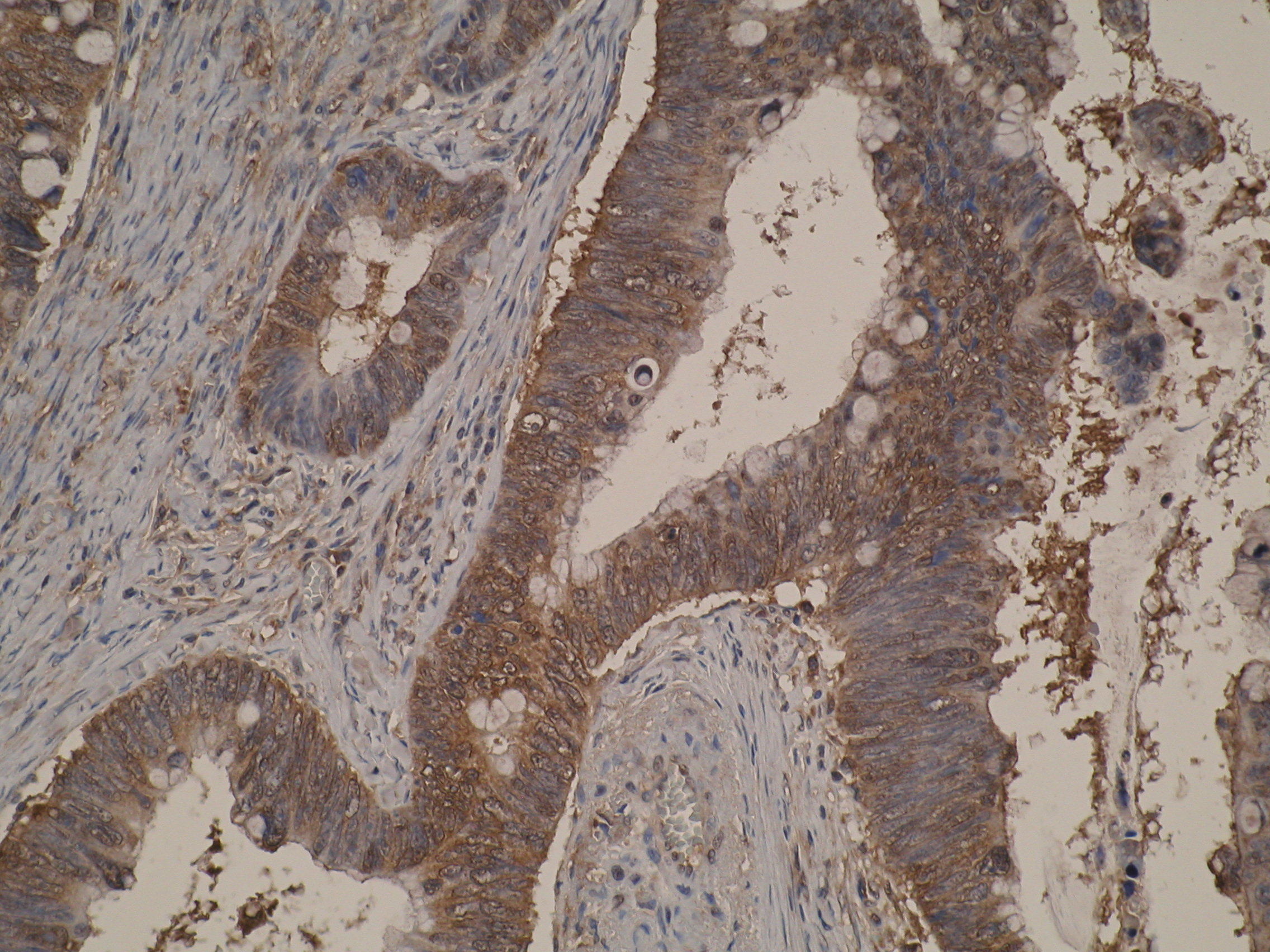
- Recommended controls: ELISA- peptide immunogenWestern Blot- Hela Whole cell extract IF- Hela cellsIHC- Human colon carcinoma
Target Details
- Target: TP53-induced glycolysis and apoptosis regulator (TIGAR)
- Tissue cell line specificity: ELISA- peptide immunogenWestern Blot- Hela Whole cell extract IF- Hela cellsIHC- Human colon carcinoma
- Target background: TIGAR (TP53 (tumor protein 53)-induced glycolysis and apoptosis regulator), also known as C12orf5, is a 270 amino acid protein induced by the p53 tumor suppressor pathway that functions to protect against oxidative stress. TIGAR shares sequence similarity with the bisphosphate domain of the fructose-2,6-bisphosphate degrading enzyme (fructose bisphosphatase or FBPase) of the glycolysis pathway and can thus lower the intracellular levels of fructose-2,6-bisphosphate. TIGAR specifically functions to block glycolysis, leading the pathway to the pentose phosphate shunt and decreasing the intracellular concentration of reactive oxygen species. This suggests a role for TIGAR in protecting cells from reactive oxygen species that can be DNA damaging and lead to apoptosis.
Applications
- Application: ELISA ; IHC ; IF ; WB
Handling
- Format: Liquid
- Concentration: 1 mg/ml
- Unit size: 100 ug
- Storage buffer: PBS with 0.02% azide
- Storage conditions: -15° C to -25° C
- Shipping conditions: Dry ice