Cat. #151858
Anti-RSV Glycoprotein F [11-2-F3]
Cat. #: 151858
Unit size: 100 ug
Availability: 3-4 weeks
Target: Respiratory Syncytial Virus glycoprotein F
Class: Monoclonal
Application: ELISA ; IF ; Fn ; WB
Reactivity: Virus
Host: Mouse
£312.00
This fee is applicable only for non-profit organisations. If you are a for-profit organisation or a researcher working on commercially-sponsored academic research, you will need to contact our licensing team for a commercial use license.
Contributor
Inventor: Ayham Alnabulsi
Institute: Vertebrate Antibodies Limited
Tool Details
*FOR RESEARCH USE ONLY (for other uses, please contact the licensing team)
- Name: Anti-RSV Glycoprotein F [11-2-F3]
- Research fields: Microbiology
- Clone: 11-2-F3
- Class: Monoclonal
- Conjugation: Unconjugated
- Strain: Balb/c
- Reactivity: Virus
- Host: Mouse
- Application: ELISA ; IF ; Fn ; WB
- Description: Human Respiratory Syncytial Virus (RSV) is a major cause of lower respiratory tract illness and is the chief cause of hospitalization for respiratory tract illness in young children.The glycoprotein F is located on the surface of viral envelope, its function is to induce fusion of viral envelope with host-cell envelope resulting in syncytium formation. The glycoprotein F (also named VP70, F0 or fusion protein) consists of two components: F1 (also named VPG48) and F2 (also named VGP26) held together by disulphide bonds. The reported molecular weight of the VGP26 component varies between 20 to 26 kDa. Immunoblot using the reduced and unreduced RS virus shows that 11-2-F3 reacts with the non-reduced form of the virus F protein (VP70) and the reduced form (F1). It has a plaque reduction neutralization titer of 10 2.2.
- Immunogen: Gradient-purified RSF-44 virus (subgroup A) UV inactivated for 20 minutes at 20C
- Isotype: IgG1 kappa, faint lambda
- Myeloma used: P3X63Ag8.653
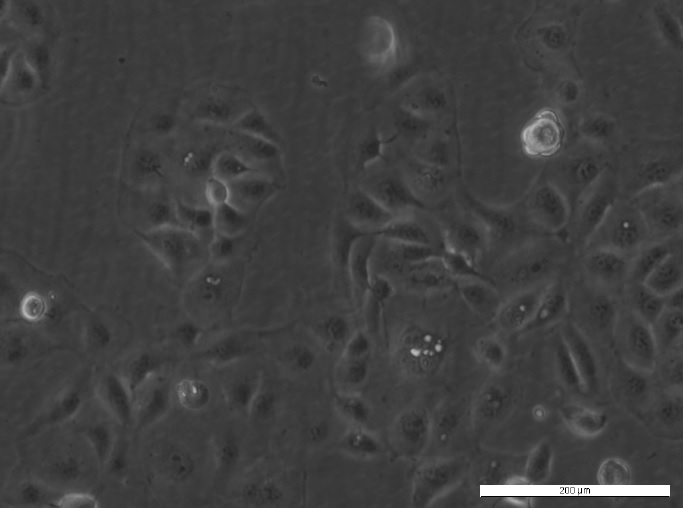
- Recommended controls: Immunoblot: Ag: gradient-purified RS virus (see figure).Indirect immunofluorescence: staining of RSA-2 infected BSC-1 cells
Target Details
- Target: Respiratory Syncytial Virus glycoprotein F
- Target background: Human Respiratory Syncytial Virus (RSV) is a major cause of lower respiratory tract illness and is the chief cause of hospitalization for respiratory tract illness in young children.The glycoprotein F is located on the surface of viral envelope, its function is to induce fusion of viral envelope with host-cell envelope resulting in syncytium formation. The glycoprotein F (also named VP70, F0 or fusion protein) consists of two components: F1 (also named VPG48) and F2 (also named VGP26) held together by disulphide bonds. The reported molecular weight of the VGP26 component varies between 20 to 26 kDa. Immunoblot using the reduced and unreduced RS virus shows that 11-2-F3 reacts with the non-reduced form of the virus F protein (VP70) and the reduced form (F1). It has a plaque reduction neutralization titer of 10 2.2.
Applications
- Application: ELISA ; IF ; Fn ; WB
Handling
- Format: Liquid
- Concentration: 1mg/ml
- Unit size: 100 ug
- Storage buffer: DulbeccoĂÂs media containing 20% Fetal Bovine serum (DH20) prepared as follows (for final volume of 300ml: 237ml DMEM plus 60 ml Fetal Bovine Serum plus 3ml L-Glutamine).
- Storage conditions: -15° C to -25° C
- Shipping conditions: Dry ice
References
- Gimenez et al. 1996. Clin Diagn Lab Immunol. 3(3):280-6. PMID: 8705669. Gimenez et al. 1986. J Gen Virol. 67 ( Pt 5):863-70. PMID: 3517224. Gimenez et al. 1984. J Gen Virol. 65 ( Pt 5):963-71. PMID: 6202832. Gimenez et al. 1987. J Gen Virol. 68 ( Pt 5):1267-75. PMID: 3572364.