Category

Cell lines

Fukushima Medical University deposits human gene-overexpressing cell lines to CancerTools.org

Fukushima Medical University aims to accelerate cancer research by contributing their human gene-overexpressing cell lines to the CancerTools.org initiative

The Fukushima Medical University (FMU) and Summit Pharmaceuticals (SPI) are existing partners of CancerTools.org who have previously contributed a unique and diverse organoid portfolio to the initiative (read the announcement here).  Further strengthening this collaboration, Fukushima Medical University (FMU) and Summit Pharmaceuticals International (SPI)  have now generously made their human gene-overexpressing cell lines available to the global cancer research tools community by  contributing them to the initiative.

The cell lines are non–tumorigenic immortalised breast epithelial cells (MCF 10A) whose proliferation depends on epidermal growth factor and which stably express mutant cancer-related genes. The cell lines represent experimental models that can be used in cell-based assays for evaluating the efficacy of anticancer agents, including molecule-targeted drugs and mutant-selective inhibitors, drug discovery, high throughput screenings and functional analyses of the mutated genes [1-2].

Progress in cancer research has always been dependent on the generosity and willingness of scientists to make their rare and unique materials accessible to their colleagues. Scientists globally will now be able to access these cell lines from FMU for use them as assay systems for anticancer agents’ evaluation and drug discovery.

As part of this partnership, CancerTools.org will work with FMU and their technology transfer partner Summit Pharmaceuticals International (SPI) to bring the production of these cell lines in-house and manage quality control and global distribution.

About CancerTools.org / Cancer Research UK

CancerTools.org, the research tools arm of CRUK, is a non-profit, global community of cancer researchers, academic institutes and societies, with a shared mission to accelerate cancer research. In this collaborative, researchers contribute research tools and share knowledge to deepen our understanding of cancer, and drive innovation within cancer research.
Cancer Research UK (CRUK) is the world’s leading charity dedicated to beating cancer through research. It invests more than £400 million annually into cancer research through funding schemes, conferences, initiatives, resources, and a UK-wide network of research infrastructure across basic, translational, clinical and population research.

About Fukushima Medical University

Fukushima Medical University was established for the purpose of educating and fostering medical education of people who contribute to the health, medical care and welfare of people in Fukushima Prefecture. At the same time, as a research institute, it has an important mission of asking the world about the results of constant research.
After the Great East Japan Earthquake and the nuclear power plant accident in 2011, the government quickly supported the resurgence of Fukushima from the perspective of medical care and health, and it has accelerated its activities in cooperation with medical institutions and research institutions around the world. As part of its activities, FMU established the Industry for Medical-Industrial Translational Research in 2012. By bridging the medical community and industry, FMU provides multifaceted support for the development of new drugs, diagnostic reagents and test reagents for cancer-based diseases.
Through these efforts, FMU is contributing to the creation, clustering and employment of pharmaceutical-related industries in Fukushima Prefecture, as well as contributing to the improvement of the quality of cancer treatment and diagnosis within Fukushima Prefecture to maintain and improve the health of the prefectural population.
For more information, visit https://www.fmu.ac.jp/home/trc/en/

About Summit Pharmaceuticals International

SPI is a company that provides support for everything from research and development to manufacturing and sales of pharmaceuticals. They offer cutting edge technology and products from all over the world to the domestic pharmaceutical industry in Japan.
For more information, visit https://www.summitpharma.co.jp/

The importance of studying Non-Melanoma Skin Cancer

The research tool: Diagnostic research tools

Professor Leigh and her team have contributed to various streams of SCC and BCC research, focusing mainly on keratinocyte biology; ranging from epithelial differentiation and the cell biology of SCC, to the molecular machinery driving non-melanoma skin cancer. Professor Leigh was a pioneer in these fields, entering research at a time when keratinocyte growth was a new technology, and was involved with producing various important antibodies and cell lines in BCC and SCC cancer identification.

We spoke with Professor Leigh and her team to delve into the importance of this stream of cancer research and what the contribution of tools can do for SCC and BCC.

The contributor

Professor Irene Leigh

Queen Mary University of London; CRUK, London Research Institute: Lincolns Inn Fields; CRUK, London Research Institute: Clare Hall Laboratories

Non- Melanoma Skin Cancer (NMSC's) diagnostic research tools

Non-melanoma skin cancers (NMSCs or Keratinocyte cancers-KC) including basal cell carcinoma (BCC) and squamous cell carcinoma (SCC),  receive less awareness than their melanoma counterpart. This is because they are perceived as causing fewer deaths, as only SCCs metastasise. However, the incidence of NMSC is very high (18-20 times higher than that of melanoma) and there are 156,000 new non-melanoma skin cancer cases in the UK every year (2016-2018) – almost 430 every single day. Non-melanoma skin cancers commonly develop due to the skins exposure to the sun. Because these cancers are caused by excessive ultraviolet radiation, patients often end up having more than one skin cancer, resulting in multiple surgeries. Both types of carcinoma have an excellent prognosis, are slow-growing and rarely metastasise, however, in some cases they can develop into invasive skin cancers, with an aggressive nature.

It is critical to study NMSCs to produce diagnostic tests which identify high-risk tumours for metastasis and progression and generate treatments which limit carcinoma recurrence, as this is more challenging to treat.

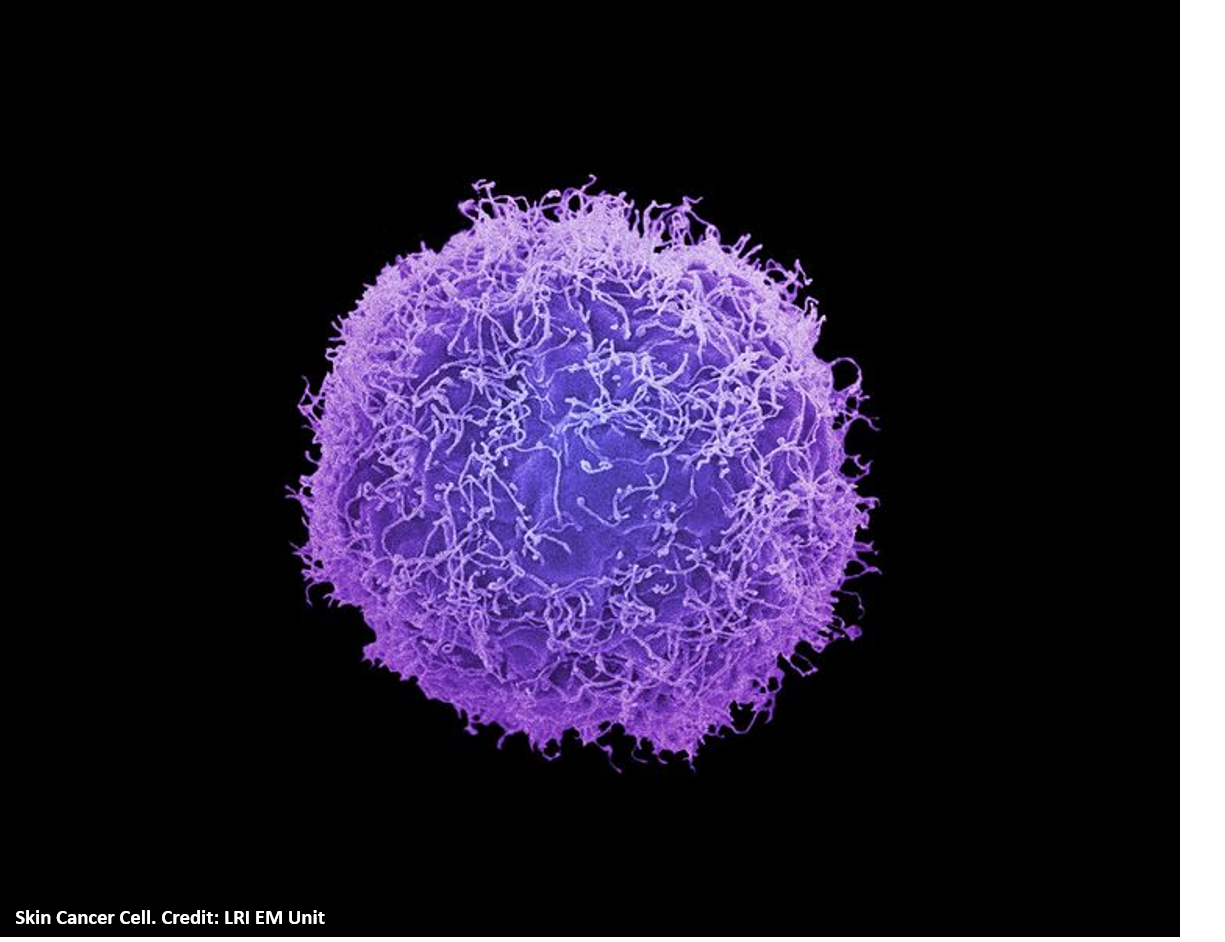
Basal Cell Carcinoma (BCC) and Squamous cell Carcinoma (SCC)

One group of patients that are significantly affected by SCC and BCC are the immunosuppressed. With over 40% of SCC mortalities occurring in organ transplant receivers, this group has an important impact on immunotherapy treatment options and survivability. In working with these patients, Professor Leigh and her team have established a unique panel of patient-derived cutaneous squamous cell carcinoma cell lines. One example from this panel is the MET1 SCC cell line.

The development of MET1 SCC cell line

This cell line was derived from a primary lesion on the hand of an immunosuppressed patient, which ultimately recurred (MET2 cell line) and metastasised (MET4SCC line), representing crucial stages in SCC transformation. Understanding the stages a squamous cell carcinoma takes in order to become increasingly invasive helps dictate preventative and therapeutic measures for this cancer. This cell line has also been used in a variety of research; from indicating HPV isn’t essential for cancerous phenotype maintenance, to furthering our understanding of epithelial-mesenchymal transition within metastasis.

Recessive Dystrophic Epidermolysis Bullosa (RBDEB)

RDEB is a debilitating condition involving a deficiency in anchoring fibrils,  predominantly type VII collagen – between the epidermis basement membrane and underlying connective tissue. This leads to extremely fragile skin with severe blistering, meaning most patients develop SCC before the age of 35. Irene and her team helped to uncover the genetic basis of this condition through their research.

The development of Anti-Collagen Type VII LH7.2 antibody

Anti-Collagen Type VII LH7.2 is a monoclonal antibody which binds to an epitope of type VII collagen within the basement membrane of stratified squamous epithelia. This antibody helps diagnose RDEB as LH7.2 binding is absent or significantly reduced in RDEB patients. LH7.2 can also be used for differentiating invasive from non-invasive melanoma by assessing the integrity of epidermal basement membranes. This enables us to predict how aggressive SCC might be in RDEB patients.

The development of Anti-Katine 5/6/18 [LP34]

Professor Leigh and her team also created a monoclonal antibody that could be used to diagnose SCC and BCC tumours. Keratins 5, 6 are members of the type II keratins family that are specifically expressed in the inner root sheath of hair follicles. Keratins demonstrate tissue and differentiation-specific expression profiles. The type II cytokeratins consist of basic or neutral proteins which are arranged in pairs of heterotypic keratin chains co-expressed during differentiation of simple and stratified epithelial tissues. Keratin 18 is a member of the type I intermediate filament chain keratin 18. Keratin 18, together with its filament partner keratin 8, are perhaps the most commonly found members of the intermediate filament gene family. These cytokeratins have been reported to be expressed in tumour cells of epithelial origin and less commonly of mesothelial origin- however, non-epithelial tumours, e.g. lymphomas, do not express these cytokeratins. Anti-Katine 5/6/18 LP34 identifies tumours with an epithelial origin and is key in pathological diagnosis and understanding metastases. As this antibody binds to keratins 5, 6 and 18, it can also be used to identify uncultured keratinocyte material. Polyspecific LP34 also has an uncommonly broad pattern of reactivity, staining all human epithelial cells – both stratified and simple epithelium.

The impact

Irene Leigh and her lab have made significant contributions to the understanding and treatment of non-melanoma skin cancers and skin diseases, generating a number of cancer research tools that can be used to diagnose these conditions. Despite the belief that these cancers are not a danger due to their high treatability and low mortality levels, investigating them can have far-reaching impacts. Understanding the common pathways between NMSCs and keratinocytes can give insight into other cancers and skin conditions. Alongside this, studying these skin cancers can lead to new novel diagnostics and therapeutics to improve cancer survival rates within at-risk populations. By contributing these research tools to the initiative, researchers globally can now utilise these tools to continue to accelerate discoveries and help grow our understanding around non-melanoma skin cancers.

Not only do we need to be able to diagnose patients more accurately, we also need to search for clues for their treatment. This could come from a variety of sources, but you need the right reagents to do so

Professor Irene Leigh

Access the research tools:

[/vc_row_inner]

About CancerTools.org

CancerTools.org, the research tools arm of Cancer Research UK, is a non-profit, global community of cancer researchers, academic institutes and societies, with a shared mission to accelerate cancer research discoveries. In this collaborative, researchers contribute research tools and share knowledge to deepen our understanding of cancer, and drive innovation within cancer research.

About Prof. Irene Leigh

Professor Irene Leigh is currently a professor of Cellular Molecular Medicine at Barts and the London School of Medicine and Dentistry, Queen Mary University London. Leigh established the Centre for Cutaneous Research at Barts and The London School of Medicine and Dentistry, Queen Mary University of London (BLSMD) which went on to become the leading research centre in skin biology and disease in the United Kingdom.

Tool enquiry

Please ensure you use your organisation email address rather than personal where possible, as this helps us locate your organisation in our system faster.

Please note we may take up to three days to respond to your enquiry.

CancerTools.org uses the contact information provided to respond to you about our research tools and service. For more information please review our privacy policy.