Anti-mNeonGreen (Rabbit) “Brainbow” pAb
The mNeonGreen polycloncal antibody is one of the Brainbow collection. The antibody host species is a Rabbit. mNeonGreen is a bright monomeric green/yellow fluorescent protein generated from Branchiostoma lanceolatum._x000D_ _x000D_ The brainbow collection has been used in a multicolour labelling strategy for the fluorescent imaging of neuronal circuits and individual neurons in mice, drosophila and […]
Contributors
| Inventor | Institute |
|---|---|
| Dawen Cai | University of Michigan, USA |
| Cat. #: | 155278 |
|---|---|
| Tool sub type: | Primary antibody |
| Unit size: | 100 μl |
| Research Fields: | Neurobiology |
| Application: | IF ; IP ; WB |
| Target: | mNeonGreen |
| Host: | Rabbit |
| Class: | Polyclonal |
| Primary citation: | Cai et al. 2013. Nat Methods. 10(6):540-547. PMID: 23817127. |
| Alternate name: | Anti-mNeonGreen (Rabbit) |
|---|---|
| Product description: | The mNeonGreen polycloncal antibody is one of the Brainbow collection. The antibody host species is a Rabbit. mNeonGreen is a bright monomeric green/yellow fluorescent protein generated from Branchiostoma lanceolatum. The brainbow collection has been used in a multicolour labelling strategy for the fluorescent imaging of neuronal circuits and individual neurons in mice, drosophila and zebrafish and non-neuronal cells in mice. The Brainbow toolkit allows scientists to image highly complex tissue structures by relying on a stochastic method for making different expression ratio combinations of fluorescent proteins so that structures in proximity can be resolved. |
| Target background: | mNeonGreen is a fluorescent protein originating from Branchiostoma lanceolatum. |
|---|
| Format: | Liquid |
|---|---|
| Storage buffer: | Serum with 0.02% sodium azide |
| Storage conditions: | Best stored at -80°C for long-term storage (>3 years) |
| Shipping conditions: | Dry ice |
| References: |
Roossien et al. 2019. Bioinformatics. 35(18):3544-3546. PMID: 30715234. Chen et al. 2018. Mol Psychiatry. 23(7):1614-1625. PMID: 28761082. Takesian et al. 2018. Nat Neurosci. 21(2):218-227. PMID: 29358666. Roossien et al. 2017. Methods Mol Biol. 1642:211-228. PMID: 28815503. Manent et al. 2017. Oncogene. 36(40):5576-5592. PMID: 28581519. Chang et al. 2017. Nat Methods. 14(6):593-599. PMID: 28417997. Zanca et al. 2017. Genes Dev. 31(12):1212-1227. PMID: 28724615. Tillberg et al. 2016. Nat Biotechnol. 34(9):987-992. PMID: 27376584. Cai et al. 2013. Nat Methods. 10(6):540-547. PMID: 23817127. |
|---|
Images
View Gallery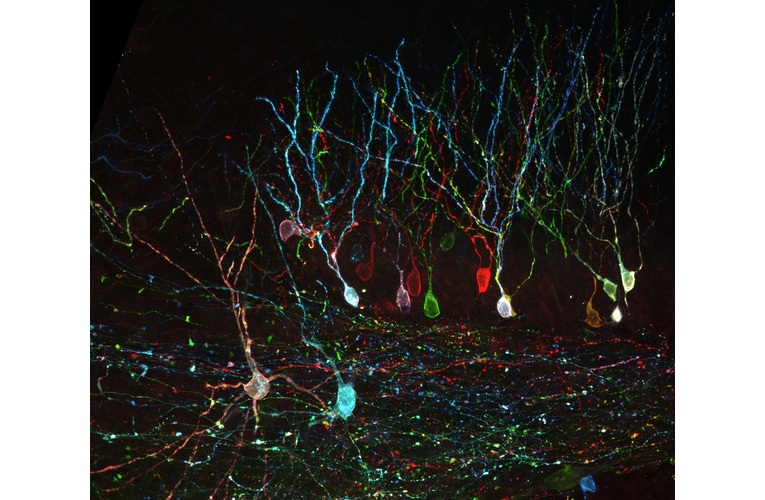
Product Images
b7f1f577-79e8-45a1-b6bc-9c0002bc9977
Related Tools for Antibodies
| Cat. # | Tool Name | |||||||||||||||||||||
|---|---|---|---|---|---|---|---|---|---|---|---|---|---|---|---|---|---|---|---|---|---|---|
| 151017 | Anti-MBP [R29.6] |
Key Info
Anti-MBP [R29.6]
|
View Tool | |||||||||||||||||||
| 151021 | Anti-CyclinB1 [V152] |
Key Info
Anti-CyclinB1 [V152]
|
View Tool | |||||||||||||||||||
| 151025 | Anti-Vascular endothelium [10] |
Key Info
Anti-Vascular endothelium [10]
|
View Tool | |||||||||||||||||||
| 151036 | Anti-ICAM1 [15.2] |
Key Info
Anti-ICAM1 [15.2]
|
View Tool | |||||||||||||||||||
| 151020 | Anti-CyclinB1 [V143.1] |
Key Info
Anti-CyclinB1 [V143.1]
|
View Tool | |||||||||||||||||||