Glioma stem-like cell line NCH645 expressing mutant isocitrate dehydrogenase (IDH), used to model low-grade gliomas or secondary glioblastomas

| Inventor | Institute |
|---|---|
| Christel Herold-Mende | Heidelberg University |
| SKU: | 162303 |
|---|---|
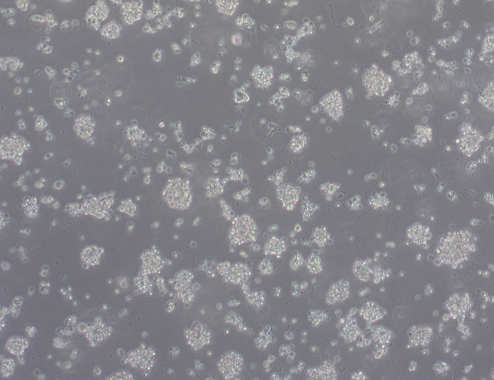
| Product description: | NCH645 is an IDH mutant glioma stem?like cell line derived from the first relapse of an astrocytoma that progressed from WHO grade II to WHO grade IV. Tumour material was obtained from a 59 year old male patient. The primary tumour was reported as MGMT promoter positive. The cells are maintained in serum-free culture and grow as free floating neurospheres. |
| Production details: | Patient-derived cell line established from human tumour tissue obtained during surgical resection and expanded in vitro. |
| Cat. #: | 162303 |
|---|---|
| Cancer types: | Brain cancer |
| Organism: | Human |
| Tissue: | Brain |
| Morphology: | Grown as free-floating neurospheres under serum-free culture conditions. |
| Growth properties: | Cells grow as free-floating neurospheres under serum-free conditions in non-adherent culture vessels. Cultures are maintained at 37°C in a humidified incubator with 5% CO2. |
| Primary citation: | Dettling et al. 2018. Clin Cancer Res. 24(12):2951-2962. PMID: 29563135. |
| Storage conditions: | FCS-free freezing medium (Synth-a-freeze medium) |
|---|---|
| Growth medium: | DMEM/F-12–based serum-free medium supplemented with BIT, GlutaMAX, EGF, and FGF-2. |
| Subculture routine: | Neurospheres are passaged at high cell density by gentle mechanical dissociation. Accutase may be used if required to obtain single-cell suspensions. Cells are reseeded in fresh serum-free medium. |
| Temperature: | 37°C |
| References: |
Trong et al. 2023. Cells. 12(8). Trong et al. 2020. Cells. 9(6). Trong et al. 2018. Int J Mol Sci. 19(10):2903. PMID: 30257451. Dettling et al. 2018. Clin Cancer Res. 24(12):2951-2962. PMID: 29563135. Bunse et al. 2015. J Clin Invest. 125(2):593-606. PMID: 25555220. |
|---|
Please note we may take up to three days to respond to your enquiry.
CancerTools.org uses the contact information provided to respond to you about our research tools and service. For more information please review our privacy policy.