Introduction
Bladder cancer is the 9th most common cancer worldwide1, with transitional cell carcinoma (urothelial carcinoma) accounting for majority of cases1. The disease presents challenges such as high recurrence rates, progression to muscle-invasive disease2, and development of treatment resistance3. Bladder cancer’s molecular heterogeneity, and sex-based differences, necessitate a diverse range of bladder cancer models, to reflect this disease3.
CancerTools.org offers an extensive collection of bladder cancer research tools, deposited by leading academic institutes worldwide. Our highly cited portfolio includes the MB49 syngeneic model – the gold standard for bladder cancer immunotherapy research and a staple in researchers’ arsenal for over 45 years. Our collection also includes a diverse array of human bladder cancer cell lines for drug screening, toxicity testing and biomarker discovery.
Drug discovery

Comprehensive Drug Screening and Development
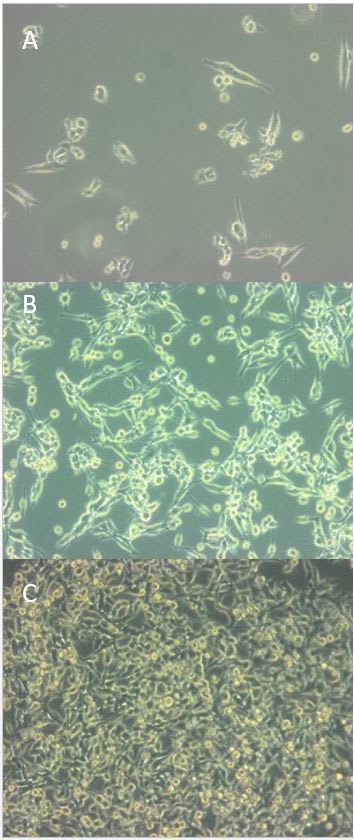
The University of Michigan collection offers 11 well characterised human urothelial cancer cell lines (UM-UC-1 to UM-UC-14) with diverse genetic backgrounds that can be leveraged for drug discovery. These models support both in vitro applications (cellular assays, signalling studies and genetic alterations) and in vivo studies (xenografting, preclinical testing).
Explore the UM-UC cell line series
| Tool name | Cat. # | Inventor / Institute | Organism | Key attributes |
|---|---|---|---|---|
| UM-UC-1 | 160436 | H. Grossman and Anita Sabichi, University of Michigan | Human | – Patient-derived urothelial carcinoma models – Derived from primary and metastatic tumours – Panel captures luminal and basal subtype diversity for biomarker and drug screening |
| UM-UC-10 | 160440 | H. Grossman and Anita Sabichi, University of Michigan | Human | – Patient-derived urothelial carcinoma models – Derived from primary and metastatic tumours – Panel captures luminal and basal subtype diversity for biomarker and drug screening |
| UM-UC-11 | 160441 | H. Grossman and Anita Sabichi, University of Michigan | Human | – Patient-derived urothelial carcinoma models – Derived from primary and metastatic tumours – Panel captures luminal and basal subtype diversity for biomarker and drug screening |
| UM-UC-13 | 160442 | H. Grossman and Anita Sabichi, University of Michigan | Human | – Patient-derived urothelial carcinoma models – Derived from primary and metastatic tumours – Panel captures luminal and basal subtype diversity for biomarker and drug screening |
| UM-UC-14 | 160443 | H. Grossman and Anita Sabichi, University of Michigan | Human | – Patient-derived urothelial carcinoma models – Derived from primary and metastatic tumours – Panel captures luminal and basal subtype diversity for biomarker and drug screening |
| UM-UC-3 | 160434 | H. Grossman and Anita Sabichi, University of Michigan | Human | – Patient-derived urothelial carcinoma models – Derived from primary and metastatic tumours – Panel captures luminal and basal subtype diversity for biomarker and drug screening |
| UM-UC-4 | 160435 | H. Grossman and Anita Sabichi, University of Michigan | Human | – Patient-derived urothelial carcinoma models – Derived from primary and metastatic tumours – Panel captures luminal and basal subtype diversity for biomarker and drug screening |
| UM-UC-5 | 160437 | H. Grossman and Anita Sabichi, University of Michigan | Human | – Patient-derived urothelial carcinoma models – Derived from primary and metastatic tumours – Panel captures luminal and basal subtype diversity for biomarker and drug screening |
| UM-UC-6 | 161805 | H. Grossman and Anita Sabichi, University of Michigan | Human | – Patient-derived urothelial carcinoma models – Derived from primary and metastatic tumours – Panel captures luminal and basal subtype diversity for biomarker and drug screening |
| UM-UC-7 | 160438 | H. Grossman and Anita Sabichi, University of Michigan | Human | – Patient-derived urothelial carcinoma models – Derived from primary and metastatic tumours – Panel captures luminal and basal subtype diversity for biomarker and drug screening |
| UM-UC-9 | 160439 | H. Grossman and Anita Sabichi, University of Michigan | Human | – Patient-derived urothelial carcinoma models – Derived from primary and metastatic tumours – Panel captures luminal and basal subtype diversity for biomarker and drug screening |
Immunotherapy Drug Discovery
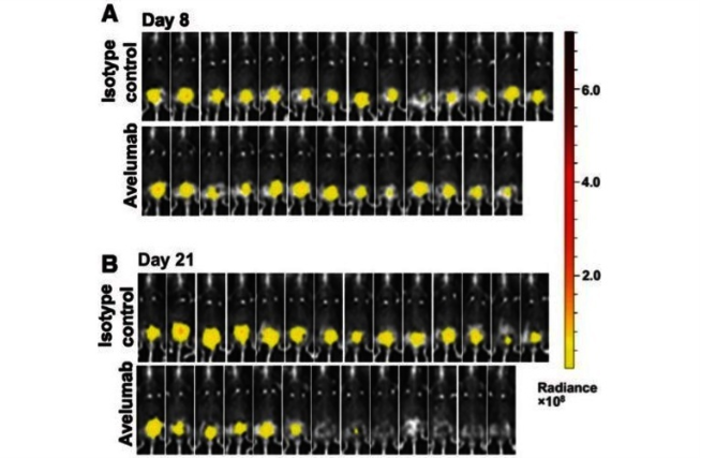
MB49 and MB49-luc are key bladder cancer models, that have enabled immunotherapy research in immunocompetent C57BL/6 mice.
MB49 is an orthotopic syngeneic model that recapitulates human bladder cancers immune microenvironment and demonstrates a clinically relevant response to checkpoint inhibitors like anti-PD1 therapy4.
MB49-luc is a modified derivative of MB49, that expresses luciferase, allowing for real-time bioluminescent tracking of therapeutic response.
Explore the MB49 cell line series
| Tool name | Cat. # | Inventor / Institute | Organism | Key attributes |
|---|---|---|---|---|
| MB49 | 153368 | Leonard Franks, Cancer Research UK, London Research Institute | Mouse | – Syngeneic murine bladder cancer model – Rapid tumour formation following subcutaneous or orthotopic implantation – Supports in vitro and in vivo studies – Used to study tumour biology and therapeutic response, including immunotherapy |
| MB49-luc | 161579 | Jeffrey Schlom, National Cancer Institute | Mouse | – Luciferase-expressing MB49 derivative – Enables non-invasive bioluminescent imaging of tumour burden – Supports longitudinal in vivo monitoring of treatment response |
Molecular Pathway Research

Invasion mechanisms
RT112/84 is a patient-derived bladder cancer model with high E-Cadherin expression and strong epithelial characteristics, making it ideal for studying how loss of cell adhesion contributes to bladder cancer invasion.
Explore RT112/84
| Tool name | Cat. # | Inventor / Institute | Organism | Key attributes |
|---|---|---|---|---|
| RT112/84 | 153250 | Chris Marshall, Cancer Research UK, London Research Institute | Human | – Patient-derived human bladder cancer cell line with epithelial phenotype – Utilised in mechanistic analysis of adhesion driven tumour progression studies. |
P53 – Tumour Suppressor Protein
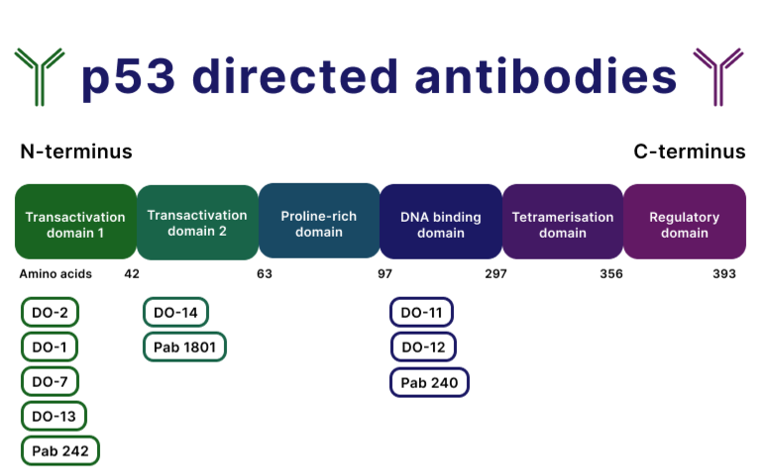
We have antibodies targeting tumour suppressor genes, including a panel of p53 antibodies (DO-11, DO-12, DO-1, Pab 240 and Pab 246) to enable detection of p53 with a range of epitopes.
Explore more tools
| Tool name | Cat. # | Inventor / Institute | Organism | Key attributes |
|---|---|---|---|---|
| NCI-HPN-F1G-Blad | 161039 | Hesed Padilla-Nash, NIH/NCI | Mouse | – Spontaneously transformed murine model supporting investigation of natural oncogenesis |
| NCI-HPN-F2G-Blad | 161042 | Hesed Padilla-Nash, NIH/NCI | Mouse | – Spontaneously transformed murine model supporting investigation of natural oncogenesis |
| NCI-HPN-M1C Blad | 161030 | Hesed Padilla-Nash, NIH/NCI | Mouse | – Spontaneously transformed murine model supporting investigation of natural oncogenesis |
| NCI-HPN-M1I-Blad | 161052 | Hesed Padilla-Nash, NIH/NCI | Mouse | – Spontaneously transformed murine model supporting investigation of natural oncogenesis |
| NCI-HPN-M2C-Blad | 161034 | Hesed Padilla-Nash, NIH/NCI | Mouse | – Spontaneously transformed murine model supporting investigation of natural oncogenesis |
References
- Zuiverloon et al. (2018). Bladder cancer (Amsterdam, Netherlands), 4(2), 169–183. PMID: 29732388
- Earl et al. (2015). BMC genomics, 16(1), 403. PMID: 2599754
- Tuo et al. (2024). Pharmacological research, 206, 107302. PMID: 39004242
- Domingos-Pereira et al. (2022). International journal of molecular sciences, 24(1), 123. PMID: 36613562
- Zuiverloon et al (2018). Bladder cancer, 4(2), 169–183. PMID: 29732388
- Vandeveer et al. (2016). Cancer immunology research, 4(5), 452–462. PMID: 26921031