Anti-CAT [CAT-1]
Antibodies directed against CAT can be used for the study of gene sequences that are fused to the CAT reporter gene.
Contributors
| Inventor | Institute |
|---|---|
| Julian Gannon | Cancer Research UK, London Research Institute: Clare Hall Laboratories |
| Cat. #: | 151085 |
|---|---|
| Tool sub type: | Primary antibody |
| Unit size: | 100 ug |
| Research Fields: | Microbiology;Cell biology;Genetics |
| Application: | WB ; IHC ; IF ; WB |
| Target: | Chloramphenicol acetyl transferase (CAT) |
| Reactivity: | Human papilloma virus |
| Clone: | CAT-1 |
| Host: | Mouse |
| Class: | Monoclonal |
| Product description: | Bacterial chloramphenicol acetyl transferase (CAT) is an enzyme that catalyzes the inactivation of the antibiotic, chloramphenicol, by acetylation and subsequently confers bacterial resistance to the antibiotic. CAT, being a stable prokaryotic enzyme, is often used as a reporter gene in transfection assays developed for eukaryotic promoters. Quantification of reporter gene expressions, such as that of CAT, can be correlated to the transcriptional functions of the target sequence. Thus, antibodies directed against CAT can be used for the study of gene sequences that are fused to the CAT reporter gene. |
|---|---|
| Conjugation: | Unconjugated |
| Isotype: | IgG1 |
| Molecular weight: | 26000 kDa |
| Immunogen: | Full length Chloramphenicol acetyl transferase |
| Myeloma used: | Sp2/0-Ag14 |
| Target background: | Bacterial chloramphenicol acetyl transferase (CAT) is an enzyme that catalyzes the inactivation of the antibiotic, chloramphenicol, by acetylation and subsequently confers bacterial resistance to the antibiotic. CAT, being a stable prokaryotic enzyme, is often used as a reporter gene in transfection assays developed for eukaryotic promoters. Quantification of reporter gene expressions, such as that of CAT, can be correlated to the transcriptional functions of the target sequence. Thus, antibodies directed against CAT can be used for the study of gene sequences that are fused to the CAT reporter gene. |
|---|
| Format: | Liquid |
|---|---|
| Concentration: | 1 mg/ml |
| Storage buffer: | PBS with 0.02% azide |
| Storage conditions: | -15° C to -25° C |
| Shipping conditions: | Dry ice |
| References: |
Augusto et al. 2019. PLoS Pathog. 15(6):e1007746. PMID: 31194856. Persson et al. 2017. Am J Physiol Renal Physiol. 312(2):F278-F283. PMID: 27927650. Mitchell et al. 2017. J Int Soc Sports Nutr. 14:17. PMID: 28603468. Sheen et al. 2016. Front Cell Neurosci. 10:167. PMID: 27445694. Kishikawa et al. 2015. Oncotarget. 6(10):8339-52. PMID: 25826076. Wang et al. 2014. Biol Reprod. 91(3):59. PMID: 25061098. Wang et al. 2014. Biol Reprod. 90(4):84. PMID: 24648395. Battisti et al. 2012. Am J Respir Cell Mol Biol. 46(4):498-506. PMID: 22074703. Barilli et al. 2011. J Leukoc Biol. 90(2):293-303. PMID: 21586674. Kuang et al. 2007. Am J Physiol Lung Cell Mol Physiol. 292(4):L944-52. PMID: 17209135. Activation of elastin transcription by transforming growth factor-beta in human lung fibroblasts. |
|---|
Images
View Gallery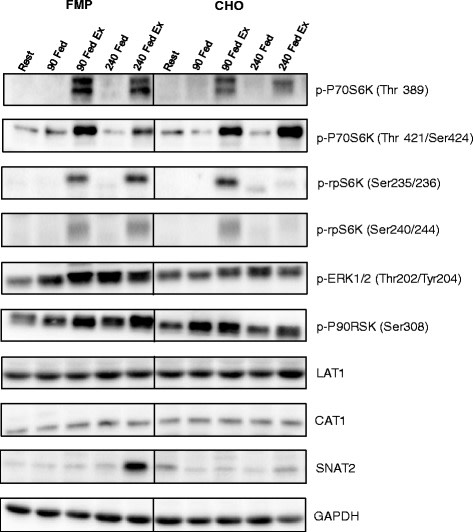
Product Images
2246742b-6f2f-4d0b-ae89-23bbbfabe209.jpg
Adapted from Mitchell CJ; Zeng N; D’Souza RF; Mitchell SM; Aasen K; Fanning AC; Poppitt SD; Cameron-Smith D. Minimal dose of milk protein concentrate to enhance the anabolic signalling response to a single bout of resistance exercise; a randomised controlled trial. J Int Soc Sports Nutr. 2017 Jun 8;14
Related Tools for Antibodies
| Cat. # | Tool Name | |||||||||||||||||||||
|---|---|---|---|---|---|---|---|---|---|---|---|---|---|---|---|---|---|---|---|---|---|---|
| 151024 | Anti-Hairy [1/24] |
Key Info
Anti-Hairy [1/24]
|
View Tool | |||||||||||||||||||
| 151029 | Anti-HSVICP8 [11E2] |
Key Info
Anti-HSVICP8 [11E2]
|
View Tool | |||||||||||||||||||
| 151033 | Anti-HSVUL42 [13C9] |
Key Info
Anti-HSVUL42 [13C9]
|
View Tool | |||||||||||||||||||
| 151040 | Anti-CD11 & CD18 [24] |
Key Info
Anti-CD11 & CD18 [24]
|
View Tool | |||||||||||||||||||
| 151039 | Anti-Integrin aVb3 [23C6] |
Key Info
Anti-Integrin aVb3 [23C6]
|
View Tool | |||||||||||||||||||