#162389

EML4‑ALK mutant murine lung cancer cell line

Cat. #162389

EML4‑ALK mutant murine lung cancer cell line

Cat. #: 162389

Organism: Mouse

Tissue: Lung

Disease: Cancer

£575.00

This fee is applicable only for non-profit organisations. If you are a for-profit organisation or a researcher working on commercially-sponsored academic research, you will need to contact our licensing team for a commercial use license.

Contributor

Inventor: Stephen Malkoski

Institute: The University of Colorado Anschutz Medical Campus

Primary Citation: Nolan et al. 2020. Cancer Cell Int. 28: 20:417. PMID: 32874131

Tool Details
Applications
Handling
References

Tool Details

*FOR RESEARCH USE ONLY (for other uses, please contact the licensing team)

  • Name: EML4‑ALK mutant murine lung cancer cell line
  • Alternate name: EML4‑ALK mutant cell line; Y143 cell line
  • Cancer type: Lung cancer
  • Research fields: Cancer biology; Immunotherapy
  • Organism: Mouse
  • Gender: Female
  • Tissue: Lung
  • Disease: Cancer
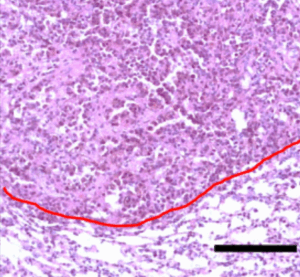
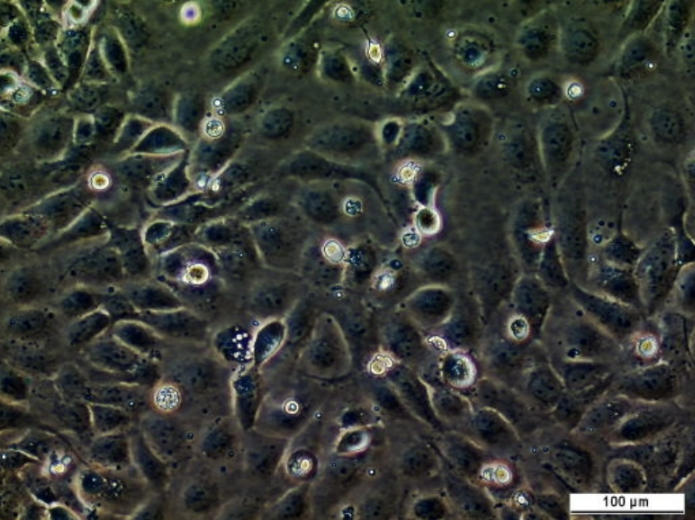
  • Description: A novel syngeneic EML4-ALK mutant murine lung cancer cell line (Y143) with orthotopic growth potential, that can serve as a useful preclinical model for evaluating tumour-host interactions, the impact of specific oncogenic alterations on the tumour microenvironment, and immunotherapeutic approaches. This cell line was derived from the primary lung tumour of a female C57BL/6 mouse harbouring the EML4-ELK gene fusion and is capable of forming orthotopic tumours in immunocompetent C57BL/6 mice. Y143 cells demonstrate the EML4-ALK genetic rearrangement as shown by PCR. In Y143 cells treatment with the EML4-ALK inhibitor crizotinib inhibits phosphorylation of AKT and ERK is inhibited in a dose dependent manner and treatment with the ALK kinase inhibitor, TAE684, inhibits growth of Y143 cells.
  • Application: 2D cell culture; Immunohistochemistry (IHC); Cell line-derived xenograft (CDX) model development
  • Production details: An 8 week old C57BL/6 female mouse was treated with 30 µl of 10^6 PFU/ml Ad-EA by tracheal instillation. The Ad-EA vector has an Ad5 backbone and harbors Cas9 and guide RNAs that lead to the EML4-ALK gene fusion. When this animal was euthanized 14 week later a group of multifocal tumors 3–5 mm in size were combined and passaged into a recipient animal. For this line, tumors formed in both lung and flank; these tumors were combined and then passaged together into both lung and flank sites of recipient animals. Subsequently, the EML4-ALK mutant cell line (Y143) was established that was capable of forming orthotopic tumours in immunocompetent C57BL/6 animals.
  • Biosafety level: 1

Applications

  • Application: 2D cell culture; Immunohistochemistry (IHC); Cell line-derived xenograft (CDX) model development

Handling

  • Format: Frozen
  • Growth medium: Dulbecco's Modified Eagle Medium (DMEM) containing 4.5 g/l d-glucose, l-glutamine, and sodium pyruvate, supplemented with 10% (v/v) fetal bovine serum and 100 μg/ml of primocin (optional)
  • Temperature: 37°C
  • Atmosphere: 5% CO2
  • Shipping conditions: Dry ice
  • Storage conditions: Liquid Nitrogen
  • Subculture routine: Split 90% confluent cultures 1:5 to 1:15 as required. Cells are cultured at 37°C, in a humidified incubator with 5% CO2.
  • Cultured in antibiotics: Primocin (optional)

References

  • Nolan et al. 2020. Cancer Cell Int. 28: 20:417. PMID: 32874131

Tool enquiry

Please ensure you use your organisation email address rather than personal where possible, as this helps us locate your organisation in our system faster.

Please note we may take up to three days to respond to your enquiry.

CancerTools.org uses the contact information provided to respond to you about our research tools and service. For more information please review our privacy policy.