MCF7 AREc32 Cell Line
Exclusive toolA human breast cancer reporter model used to investigate oxidative stress signalling, antioxidant response pathways, and high-throughout compound screening.
Contributors
| Inventor | Institute |
|---|---|
| Roland Wolf | University of Dundee |
| SKU: | 151014 |
|---|---|
| Product description: | The stable human mammary MCF7 AREc32 reporter cell line contains copies of the rat GST antioxidant response element (ARE) linked to a luciferase reporter gene, such that the induction of the ARE results in luciferase activity. ARE is a transcriptional cis-regulatory element involved in the activation of genes coding for a number of antioxidant proteins and enzymes that work in concert to protect tissues from oxidative insults. This cell line can be used to evaluate how potential anti-cancer agents modulate ARE-mediated antioxidant pathways and identify antioxidant proteins that may serve as potential therapeutic targets. |
| Conditional: | Yes |
| Production details: | The ARE-luciferase reporter plasmid was generated using the pGL3-promoter vector containing an SV40 promoter upstream of the firefly luciferase gene. They differ in the number of copies of ARE sequences that have been inserted, in head-to-tail orientation, through Nhe I & Xho I restrictionsites upstream of the promoter-luc+ transcriptional unit. A plasmid was made containing eight copies of the ARE (5′-GTGACAAAGCA-3′, with the minimal functional sequence underlined) present in both rat GSTA2 and mouse gsta1; called pGL-8xARE. A linker with the sequence of 5′-CCC-3′ and 5′-GGG-3′ on the opposite strand was placed between individual cis-elements.pGL-8xARE, was stably transfected into MCF7 cells using the calcium phosphate method. Transfected cells were selected using 0.8 mg/mL G418 in the media for 3 to 4 weeks. The G418-resistant clones were isolated and screened by measuring their basal and inducible (obtained by treatment with 50 Amol/L t-BHQ) luciferase activities as described above. Positive clones, which showed low background and high inducible luciferase activity, were passaged and maintained in growth medium containing 0.8 mg/mL G418. |
| Cellosaurus ID: | CVCL_1D32 |
| Parental cell line: | MCF7 |
| Disease: | Cancer |
| Cat. #: | 151014 |
|---|---|
| Tool sub type: | Continuous |
| Unit size: | 1×10^6 cells / vial |
| Cancer types: | Breast cancer |
| Organism: | Human |
| Tissue: | Breast |
| Model: | Reporter |
| Primary citation: | Wang et al. 2006. Cancer Res. 66(22):10983-94. PMID: 17108137 |
| Format: | Frozen |
|---|---|
| Storage conditions: | Liquid Nitrogen |
| Shipping conditions: | Dry ice |
| Growth medium: | DMEM with 2.5 mM Glutamax supplemented with 10% fetal bovine serum and antibiotics. Do not culture beyond 15 passages after revival. |
| Subculture routine: | Split sub-confluent cultures (70-80%) 1:3 to 1:6 i.e. seeding at 2-4 x 10^4 cells/cm² using 0.05% trypsin/EDTA solution. Cells are cultured at 37°C, in 95% air and 5% CO₂, and passaged every 3 to 4 days. |
| Recommended controls: | MCF7 parental line |
| Mycoplasma free: | Yes |
| Biosafety level: | 1 |
| References: |
Gameiro et al. 2017. Sci Rep. 7:45701. PMID: 28361919. MacLeod et al. 2016. Br J Cancer. PMID: 27824809. Basar et al. 2016. Phytochem Anal. 27(5):233-8. PMID: 27527356. Braunig et al. 2016. Chemosphere. 156:181-90. PMID: 27176940. Brack et al. 2016. Sci Total Environ. 544:1073-118. PMID: 26779957. Rucker et al. 2015. Org Biomol Chem. 13(10):3040-7. PMID: 25622264. Buendia et al. 2015. Future Med Chem. 7(15):1961-9. PMID: 26496465. Escher et al. 2012. J Environ Monit. 14(11):2877-85. PMID: 23032559. Wang et al. 2007. Proc Natl Acad Sci U S A. 104(49):19589-94. PMID: 18048326. Wang et al. 2006. Cancer Res. 66(22):10983-94. PMID: 17108137. |
|---|
Images
View Gallery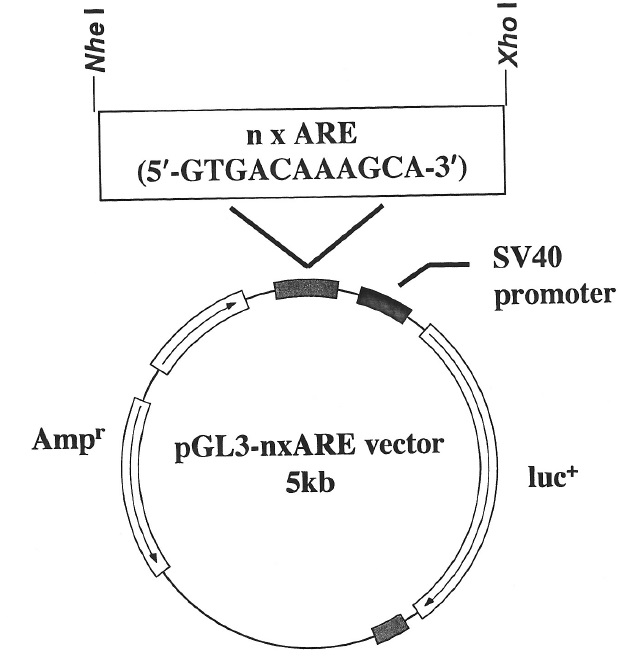
Product Images
 Powered by Bioz