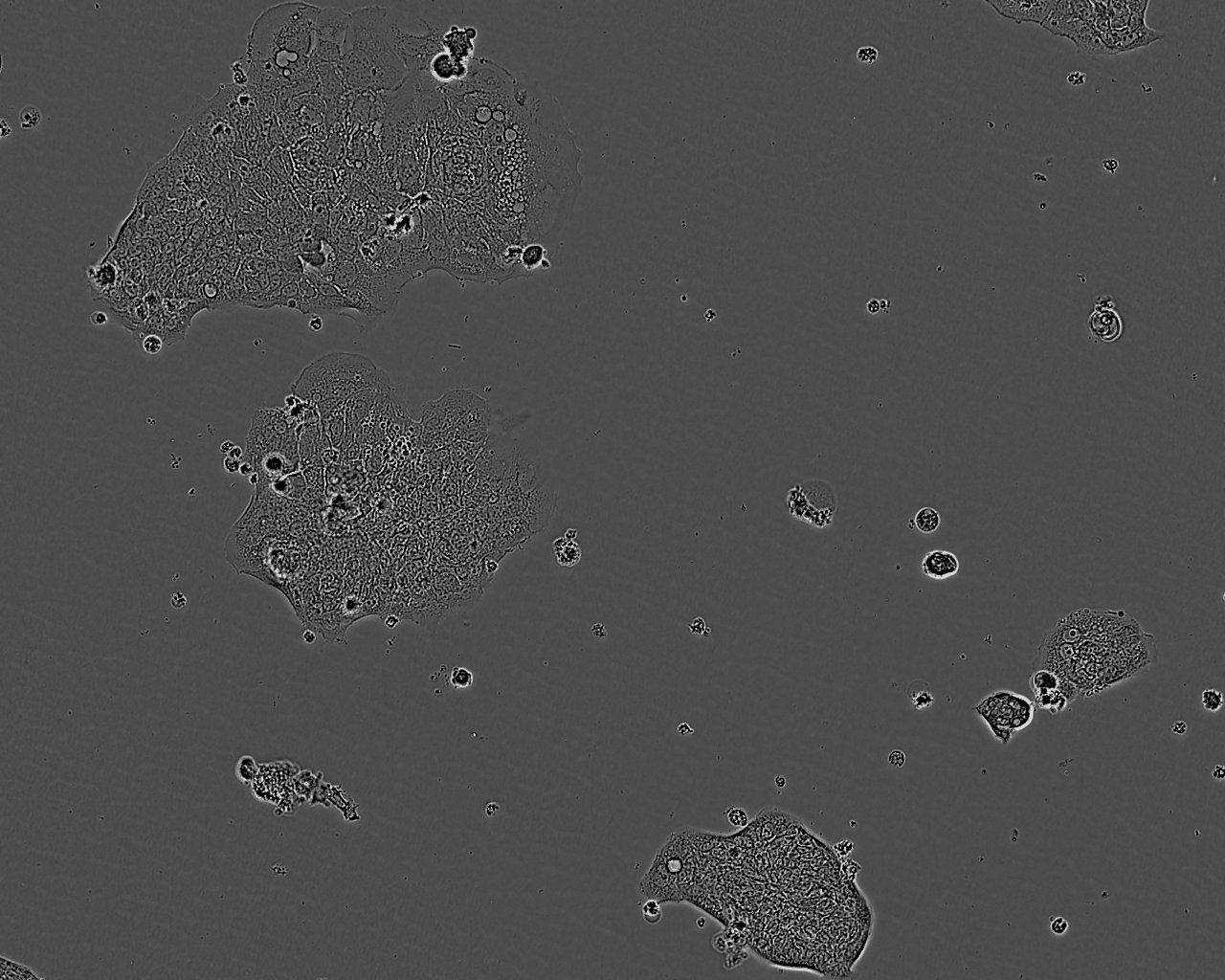
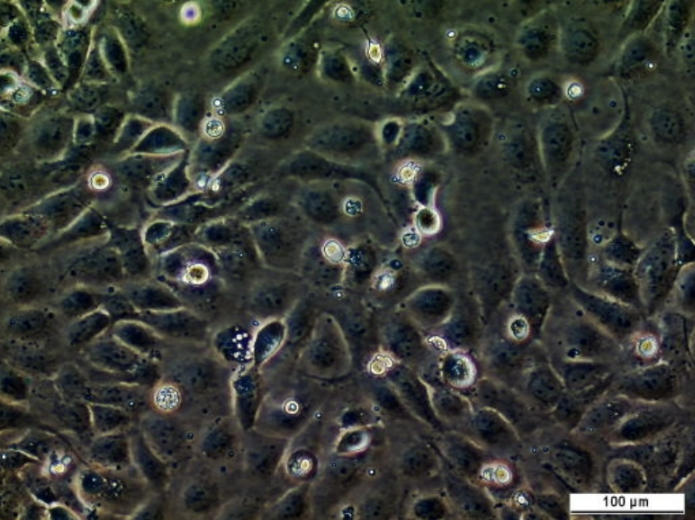
Cat. #151757
C70 Colorectal adenocarcinoma Cell Line
Cat. #: 151757
Unit size: 1x10^6 cells / vial
Organism: Human
Tissue: Colon
Model: Tumour line
£598.00
This fee is applicable only for non-profit organisations. If you are a for-profit organisation or a researcher working on commercially-sponsored academic research, you will need to contact our licensing team for a commercial use license.
Contributor
Inventor: Walter Bodmer
Institute: University of Oxford
Tool Details
*FOR RESEARCH USE ONLY (for other uses, please contact the licensing team)
- Name: C70 Colorectal adenocarcinoma Cell Line
- Cancer type: Colorectal cancer
- Research fields: Cancer;Drug development
- Organism: Human
- Gender: Female
- Tissue: Colon
- Growth properties: Adherent
- Model: Tumour line
- Conditional: No
- Description: The C70 cell line was established from a 60-year old female patient with a moderately well differentiated adenocarcinoma of the sigmoid colon classified as Dukes' stage B
- Cellosaurus id: CVCL_5247
Handling
- Format: Frozen
- Growth medium: Iscove's Modified Dulbecco's Medium, + 10% Foetal Bovine Serum (FBS) + 2 mM Glutamine.
- Unit size: 1x10^6 cells / vial
- Shipping conditions: Dry ice
- Subculture routine: Split sub-confluent cultures (70-80%) 1:3 to 1:6 i.e. seeding at 2-4x10,000 cells/cm² using 0.05% trypsin or trypsin/EDTA; 5% CO₂; 37°C. C70 cells grow slowly. Following resuscitation or subculture the cells take at least 48 hours to re-attach. Cells should be left without disturbance during this time to facilitate adhesion. Once attached, the cells grow in discrete islands and use of trypsin or trypsin/EDTA to subculture the cells yields large clumps. Further disaggregation may be achieved by repeatedly pipetting the cells.
- Str profiling: Amelogenin: X CSF1PO: 12 D5S818: 10 D7S820: 9 D13S317: 12 D16S539: 11,12 TH01: 6,9.3 TPOX: 8,11 vWA: 17,18
References
- Browning et al. 1993. Proc Natl Acad Sci U S A. 90(7):2842-2845. PMID: 8464898.