Glioblastoma (GBM) is one of the most challenging cancers to understand and treat. Dr. Gillian Morrison, lead scientist and manager of the Glioma Cellular Genetics Resource (GCGR), shares insights into the development of this collection of well-characterised, patient-derived glioma stem cell (GSC) models. Discover how the GCGR is supporting research into GBM biology, while helping researchers worldwide investigate new approaches to treatment.
Building better models to understand glioblastoma
Glioblastoma (GBM) is a highly complex disease. The huge variation between GBM patients’ tumours make it difficult to develop models that capture the full spectrum of the disease. For researchers trying to understand GBM biology, identify new therapeutic targets or develop treatments, having access to relevant and reliable experimental models is essential. However, the limited number of commonly used models can make it challenging to represent the genetic and transcriptional diversity observed across patients.
Addressing these challenges was a key driver behind the development of the Glioma Cellular Genetics Resource (GCGR), an open collection of patient-derived glioma stem cell (GSC) models spanning different GBM-subtypes, alongside normal human neural stem cell (NSC) controls.
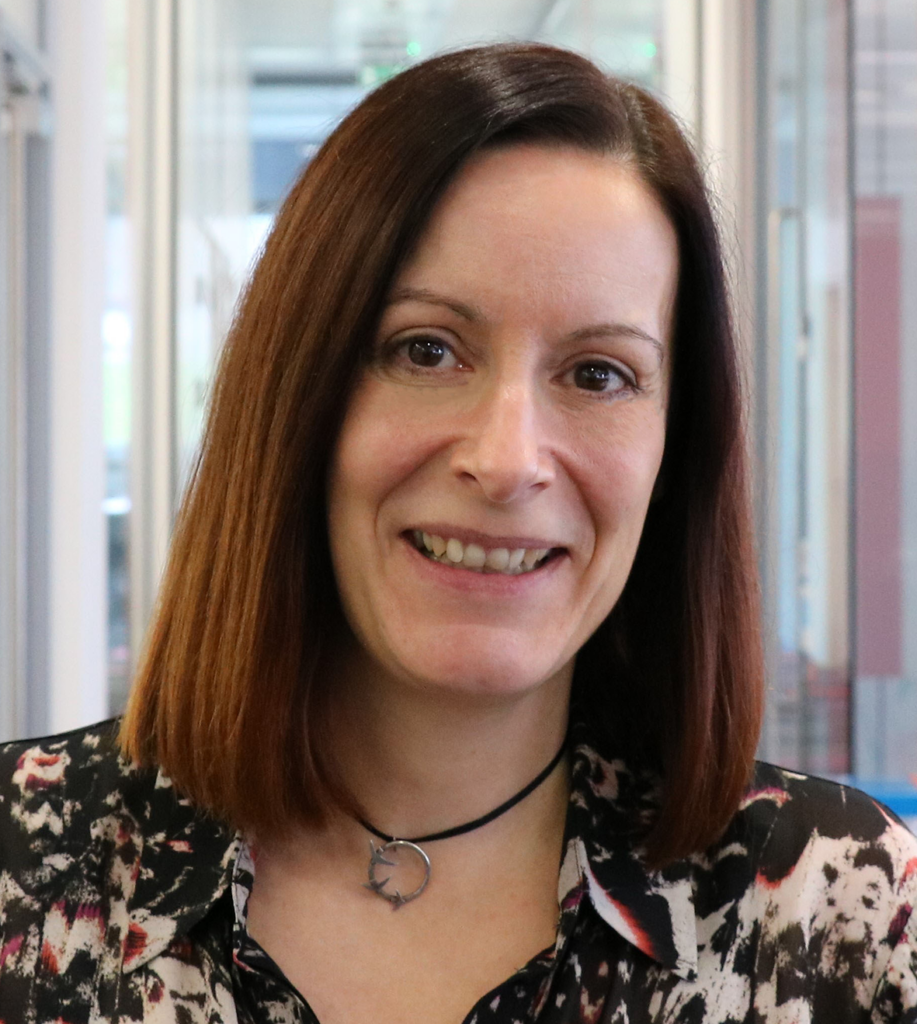
At the heart of the resource is a team led by Dr. Gillian Morrison and Prof. Steve Pollard at the University of Edinburgh, with Gillian serving as lead scientist and manager. Working in collaboration with UCL, the team set out to create a high-quality, molecularly annotated and functionally validated collection of cell lines that could provide researchers with a more representative toolkit for studying glioblastoma.
“The GCGR is an extensive collection of validated glioma primary cell lines, covering the spectrum of GBM subtypes and common mutations and normal human neural stem cells as reference controls. All cell lines were derived, expanded and profiled by a single coordinated team of expert researchers based in world-leading academic labs”
— Dr. Gillian Morrison
From stem cell expertise to a community resource
Establishing the foundations
The foundations for the GCGR were established well before the resource itself was created. In 2005, Prof. Pollard and collaborators developed improved methods for culturing normal NSCs and these same defined conditions were later used to culture GSCs1 . These methods made it possible to routinely isolate, expand and genetically manipulate primary GBM cells while maintaining their stem cell-like characteristics. This established the groundwork for developing and studying patient-derived models in a more consistent way.
For Gillian and her colleagues, the next step was to apply this expertise to a resource that could benefit the wider research community. With funding from Cancer Research UK, researchers at the University of Edinburgh and UCL worked to develop a diverse collection of patient-derived GSC models alongside normal human NSC controls.
“We were expertly placed to generate a gold-standard collection of human preclinical cellular models and provide the “go-to” reliable resource for the research community,” says Gillian.
Building a panel researchers could rely on
Creating the GCGR brought together expertise from across the two institutions. The Pollard Lab had established protocols for deriving and expanding patient-derived GSCs and NSCs, as well as methods for assessing tumour formation in vivo. Meanwhile, collaborators at UCL contributed expertise in molecular profiling and access to additional tumour tissue.
As Gillian recalls:
“We benefitted from a close working relationship with the surgical teams, enabling us to get many fresh tissue samples. And UCL had in-house expertise and the infrastructure for the molecular profiling. That, alongside a team of talented cell culture specialists, allowed us to generate, profile and distribute cell lines to the research community in a very short period of time.”
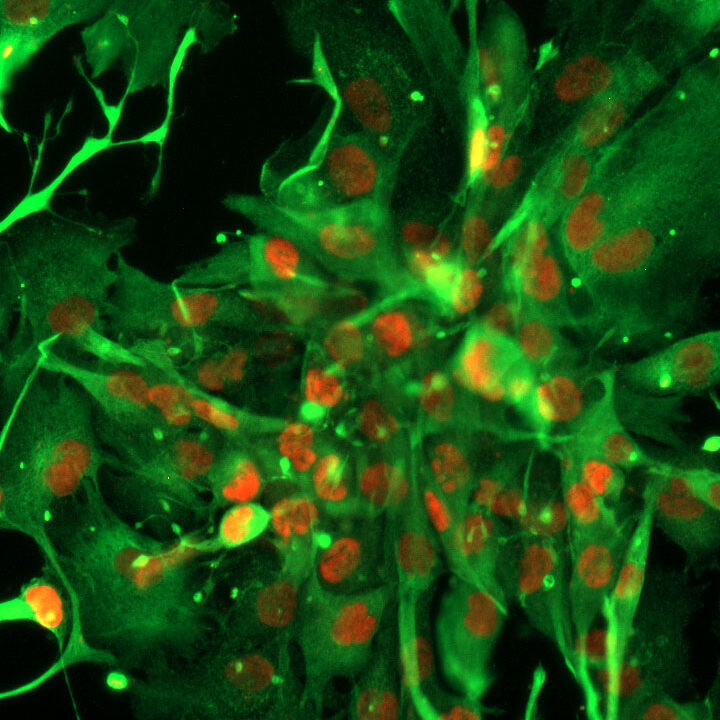
The project nevertheless faced an unexpected challenge. The COVID-19 pandemic brought university research to a halt while cell line derivation and in vivo experiments were underway.
Gillian credits her Edinburgh team with helping the project resume once laboratories reopened:
“I had an excellent team working with me in Edinburgh, who went above and beyond what was expected of them.”
The team also began sharing GCGR cells while the resource was still being developed. This allowed other researchers to benefit from the models and provided valuable feedback on their quality and performance.
“The hope was by sharing standardised cell models, we could cross compare discoveries and findings across groups – and that has worked really well.”
This sharing approach remains at the heart of the GCGR, providing researchers with a diverse portfolio of well-characterised models that support a range of applications and enable findings to be built upon across the research community.
Models to support discovery and drug development
Understanding why glioblastoma responds differently to treatment requires models that reflect the disease’s biological diversity. The GCGR panel addresses this by bringing together primary, patient-derived, IDH-wildtype glioblastoma stem-like cell lines spanning classical, proneural, and mesenchymal states. Each line has been deeply characterised using transcriptomic, genomic and DNA methylation profiling, providing researchers with molecular context for interpreting experimental findings and comparing responses across models.
For Gillian, this diversity is particularly valuable:
Having a diverse range of GSC lines mean we can look at specific features of various subtypes but also find commonalities and shared vulnerabilities, all with the aim of uncovering new therapeutic targets.
The models also retain intrinsic cellular heterogeneity and stem-like characteristics, while growing as adherent monolayers. This combination supports consistent cell expansion and a range of experimental approaches, including large-scale high throughput screening.
For academic researchers, the panel can help investigate how tumour cells behave, adapt and evolve across different molecular backgrounds. For drug discovery teams, using multiple patient-derived models creates an opportunity to examine compound activity across different GBM cellular states, rather than relying on results from a single model.
The cell lines are also tumourigenic in vivo, extending the panel’s utility beyond in vitro experiments. As such, the panel supports research into tumour initiation, disease progression and potential therapeutic vulnerabilities, while helping connect findings from cell-based experiments with further preclinical investigations.
The GCGR panel in action
The GCGR panel is already shaping the current glioblastoma research landscape.
The cell lines are being used by over 100 research labs worldwide and are already having an impact. Phenotypic screens have revealed new compounds for further development and cutting-edge research has led to the development of a brand-new therapeutic currently in clinical trial.
For Gillian, this impact reflects the community spirit of the researchers who established and continue to support the GCGR panel. The resource is also central to her own research: engineering normal human NSC lines into GBM-like models and studying tumour cells over time under different pressures to understand how they develop mechanisms that enable them to survive.
The GCGR models have been integral to research within the Pollard lab, including studies into paediatric glioma2, acquired immune evasion programmes3 and synthetic super enhancers designed to deliver treatments specifically to GBM4. This latter work helped underpin the development of a new start-up company, Trogenix Ltd, and a therapy that his since entered clinical trials.
Can phenotypic screening reveal new GBM treatments?
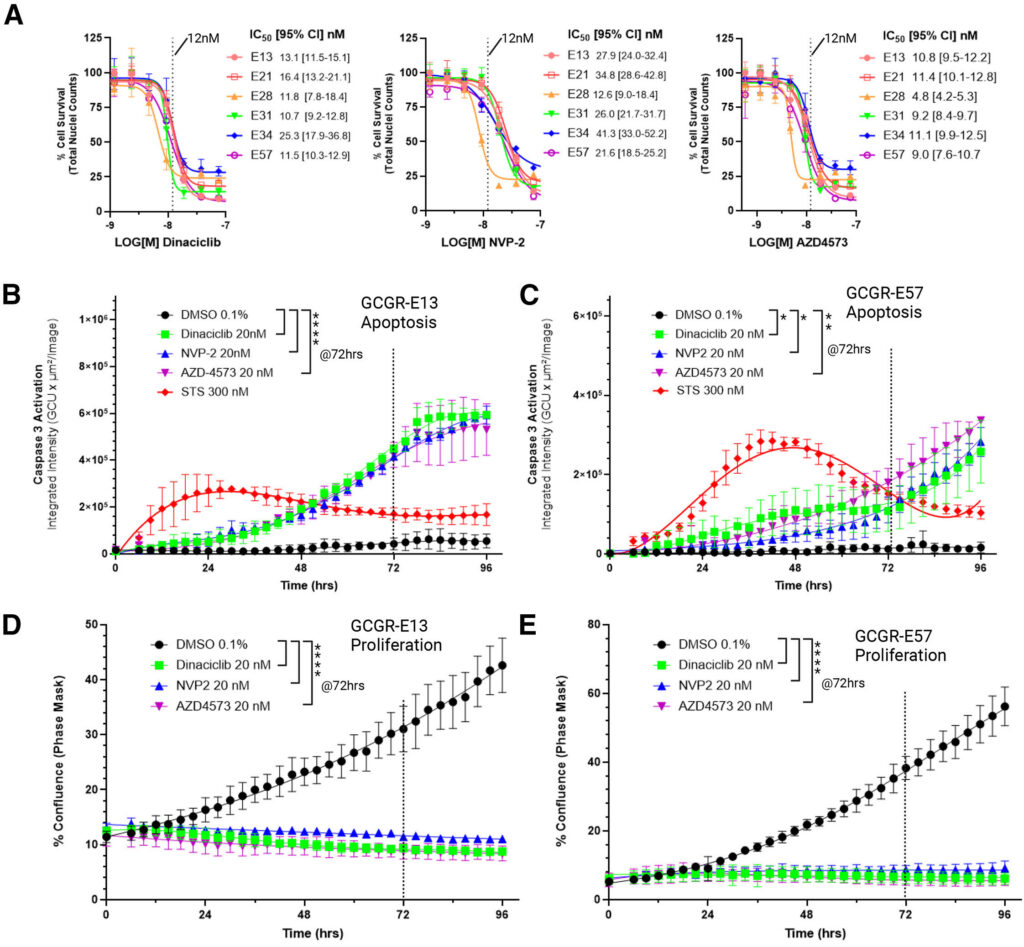
The GCGR panel recently helped researchers uncover actionable vulnerabilities across GBM stem cell phenotypes.
In a 2026 study led by Neil Carragher’s team4 , researchers used six patient-derived GSC lines from the GCGR in an automated Cell Painting assay. They screened 3,866 compounds and following hit validation, they identified compounds associated with diverse pharmacological classes and potential drug targets, including HDAC and CDK9 inhibitors.
By applying the same screening approach across genetically distinct patient-derived models, the researchers could investigate how compounds affected different GBM cellular backgrounds. This demonstrates how a well-characterised model panel can support more comprehensive drug discovery, helping researchers identify potential therapeutic strategies that account for the biological heterogeneity of glioblastoma.
The researchers also made the full screening dataset publicly available, creating a valuable resource for future GBM research.
Gillian hopes the panel will continue to support a growing and diverse research community:
“We still need more discovery science to understand the complex biology of the tumour cells and the tumour environment. Heterogeneity and plasticity are major areas still to understand.”
Looking ahead to accelerate glioblastoma research
For Gillian, the value of the GCGR panel lies in bringing together a diverse collection of well-characterised glioma models that researchers can use with confidence. As interest in the panel grew, the team recognised the value of making this high-quality resource openly accessible and in doing so, needed a dedicated team to support its distribution.
Our work was funded by Cancer Research UK, so CancerTools was the obvious choice. We also received positive feedback from our colleagues who are already sharing their reagents through CancerTools. This will hopefully enable the models to reach far and wide for the benefit of all. And it’s a major plus that we know funding will flow back into more Cancer Research UK-funded science!
Looking ahead, Gillian sees opportunities to combine GCGR models with increasingly sophisticated experimental systems, including artificial niches, microfluidic platforms and 2D and 3D co-culture models. These approaches could help researchers investigate how tumour cells interact with their surrounding environment and respond to changing conditions.
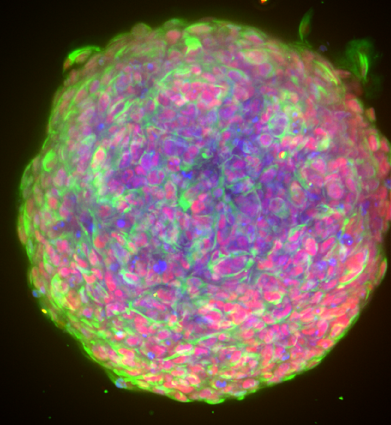
Emerging technologies such as single-cell and spatial omics, live imaging and artificial intelligence may also provide new opportunities to investigate the mechanisms underlying tumour heterogeneity, plasticity and treatment response.
The aim is for the GCGR cell lines to draw in new science and scientists into the brain tumour field. It’s such a challenging, complicated disease to tackle that we want to see the lines used in as much high-quality and diverse research as possible.
With the models already being used by research groups worldwide, Gillian’s ambition is to see the GCGR help drive discoveries that could ultimately contribute to better treatments – and, one day, a cure for glioblastoma.
References
- Pollard, S.M. et al., 2009. Cell Stem Cell. 4(6), 568-80. PMID: 19497285
- Bressan, R.B. et al., 2021. Cell Stem Cell. 28(5), 877-893. PMID: 33631116
- Gangoso, E. et al., 2021. Cell. 184(9), 2454-2470. PMID: 33857425
- Keober U. et al., 2026. Nature. 653(8113), 232-241. PMID: 41951744
- Elliott, R. J. et al., 2026. iScience. 29(6), 115839. PMID 42205701