Anti-CAR Whitlow Linker [1C3C3]
The anti-CAR Whitlow linker peptide 1C3C3 clone has been developed to detect cells expressing Whitlow linker-containing CARs with different antigen specificities, including those harbouring the widely employed anti-CD19 FMC63-derived scFv as well as other scFvs, such as those targeting B-cell maturation antigen (BCMA) or CD33. It has been demonstrated to have a mean KD of […]
Contributors
| Inventor | Institute |
|---|---|
| Erik Kimble, Jocelyn Wright | Fred Hutchinson Cancer Center |
| Cat. #: | 162441 |
|---|---|
| Unit size: | 1 mg |
| Application: | Flow cytometry, IHC, stimulation of T cells |
| Target: | Chimeric antigen receptor Whitlow scFv peptide linker |
| Clone: | 1C3C3 |
| Host: | Mouse |
| Class: | Monoclonal |
| Primary citation: | Kimble et al. 2025.J Immunother Cancer. 2025 Nov 18;13(11):e013123. PMID: 41253500 |
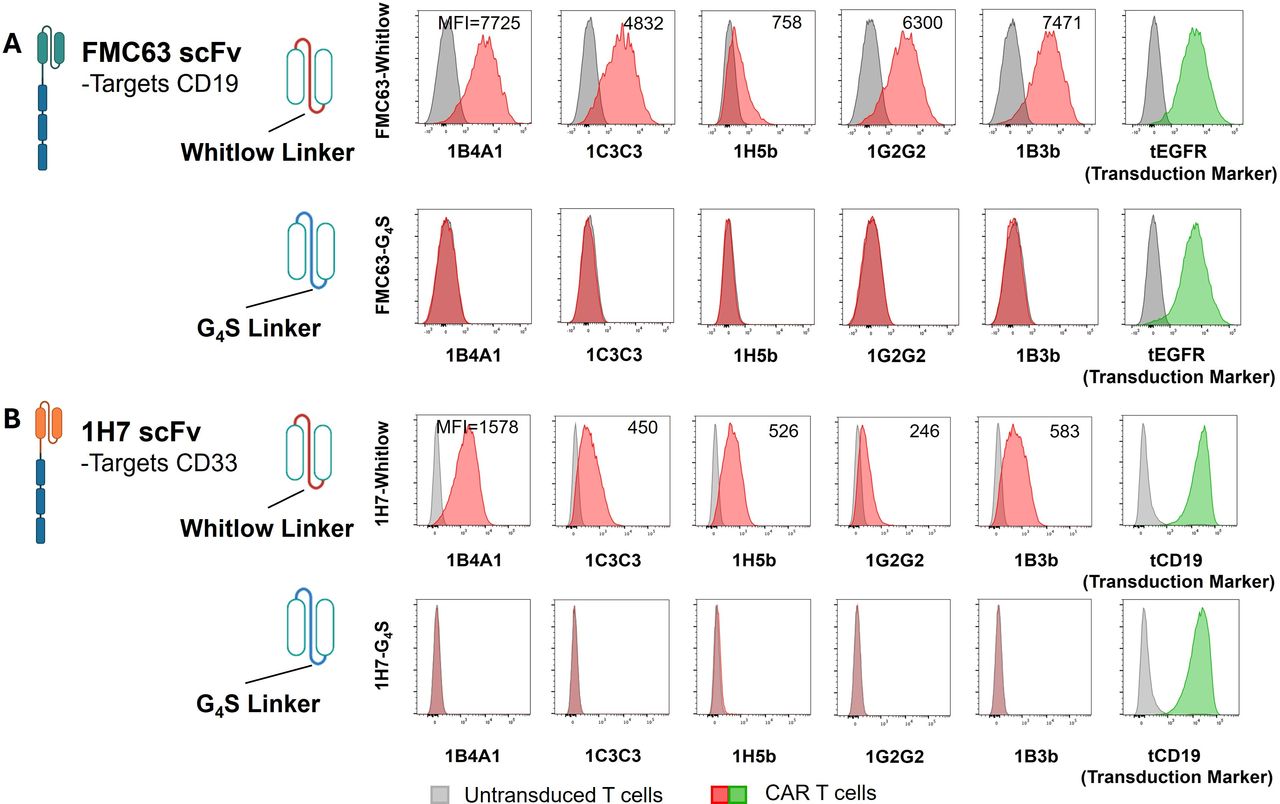
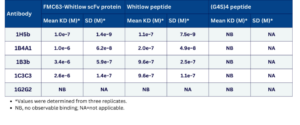
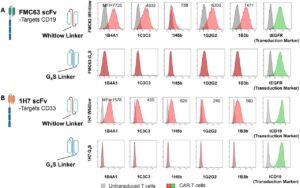
| Product description: | The anti-CAR Whitlow linker peptide 1C3C3 clone has been developed to detect cells expressing Whitlow linker-containing CARs with different antigen specificities, including those harbouring the widely employed anti-CD19 FMC63-derived scFv as well as other scFvs, such as those targeting B-cell maturation antigen (BCMA) or CD33. It has been demonstrated to have a mean KD of 1 to 2.6 µM when tested for binding kinetics against FMC63-Whitlow scFv protein and the Whitlow peptide. No binding to G4S4 peptide was found. In addition, the 1C3C3 antibody has been demonstrated to stain engineered T cells expressing 1H7- or FMC63-Whiltow, but not 1H7- or FMC63- G4S4 by FACS analysis. In functional assays, 1C3C3 acts as a potent agonist antibody: when immobilized, it robustly activates Whitlow‑linker CAR‑expressing Jurkat reporter cells and primary CAR T cells, driving CAR signalling, cytokine secretion, and proliferation. |
|---|---|
| Conjugation: | Unconjugated |
| Isotype: | IgG2a |
| Immunogen: | Synthetic Whitlow peptide |
| Target background: | While CAR T-cell therapies have revolutionized the treatment of B-lineage malignancies, high-resolution tracking of CAR-engineered cells within the tumor microenvironment (TME) remains a significant technical challenge, particularly in archival formalin-fixed paraffin-embedded (FFPE) tissues. To address this, murine monoclonal antibodies (mAbs) have been developed to specifically target the Whitlow linker, a synthetic peptide commonly utilized in the scFv domains of multiple FDA-approved CAR products (e.g., axi-cel, liso-cel). Because this linker is absent in native human tissue and conserved across various antigen specificities, these mAbs provide a universal tool for the in situ identification, selection, and functional analysis of CAR-expressing cells. This methodology enables a more precise evaluation of CAR T-cell infiltration, persistence, and correlation with clinical outcomes or toxicities. |
|---|
Images
View Gallery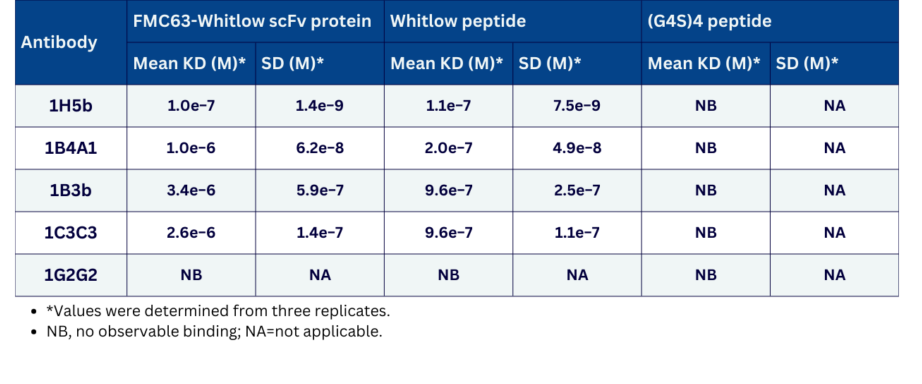
Product Images
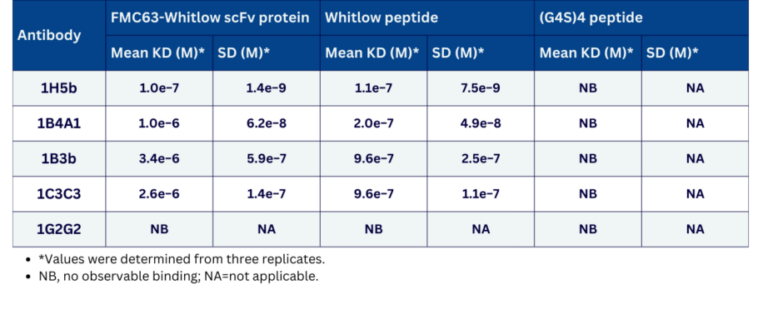
Kimble et al Whitlow antibody Equilibrium dissociation constant (KD)
Table adapted from Kimble et al. 2025, outlining the Equilibrium dissociation constant (KD) of the anti-Whitlow antibodies.
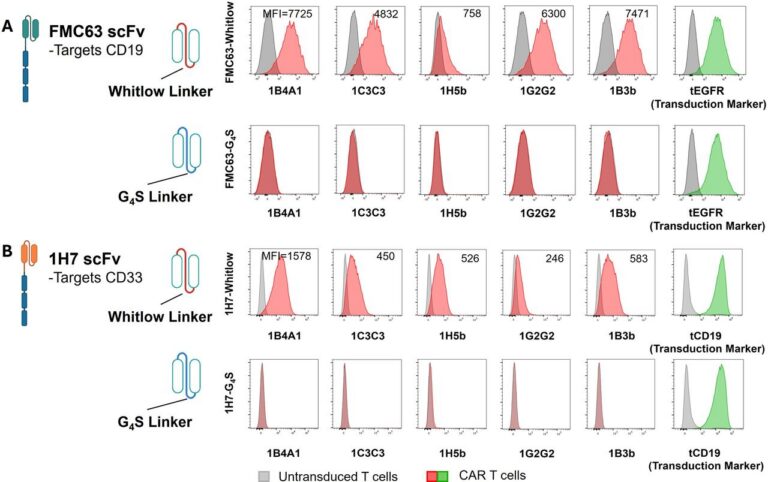
Figure 2 Kimble et al., J Immunother Cancer 2025
Related Tools for Antibodies
| Cat. # | Tool Name | |||||||||||||||||||||
|---|---|---|---|---|---|---|---|---|---|---|---|---|---|---|---|---|---|---|---|---|---|---|
| 151022 | Anti-IL12 [1-1A4] |
Key Info
Anti-IL12 [1-1A4]
|
View Tool | |||||||||||||||||||
| 151028 | Anti-Cytochrome P450 2C2, 2B1/2 [h7] |
Key Info
Anti-Cytochrome P450 2C2, 2B1/2 [h7]
|
View Tool | |||||||||||||||||||
| 151034 | Anti-HSVUL42 [13D11] |
Key Info
Anti-HSVUL42 [13D11]
|
View Tool | |||||||||||||||||||
| 151038 | Anti-Cytochrome P450 4A2, 4A3 [Clo4] |
Key Info
Anti-Cytochrome P450 4A2, 4A3 [Clo4]
|
View Tool | |||||||||||||||||||
| 151018 | Anti-Mos [R38.1] |
Key Info
Anti-Mos [R38.1]
|
View Tool | |||||||||||||||||||