EGFR in lung cancer: a revolution in targeted therapy
The discovery of Epidermal Growth Factor Receptor (EGFR) mutations has transformed the treatment of Non-Small Cell Lung Cancer (NSCLC), the most common type of lung cancer. There has been a paradigm shift from a one-sized-fits-all treatment approach to precision medicine, fundamentally changing how we diagnose and treat this highly heterogeneous disease.
This infographic illuminates science around the EGFR mutations, as well as the clinical impact in NSCLC, and explores the future of EGFR research and targeted therapies.
Understanding the pathway
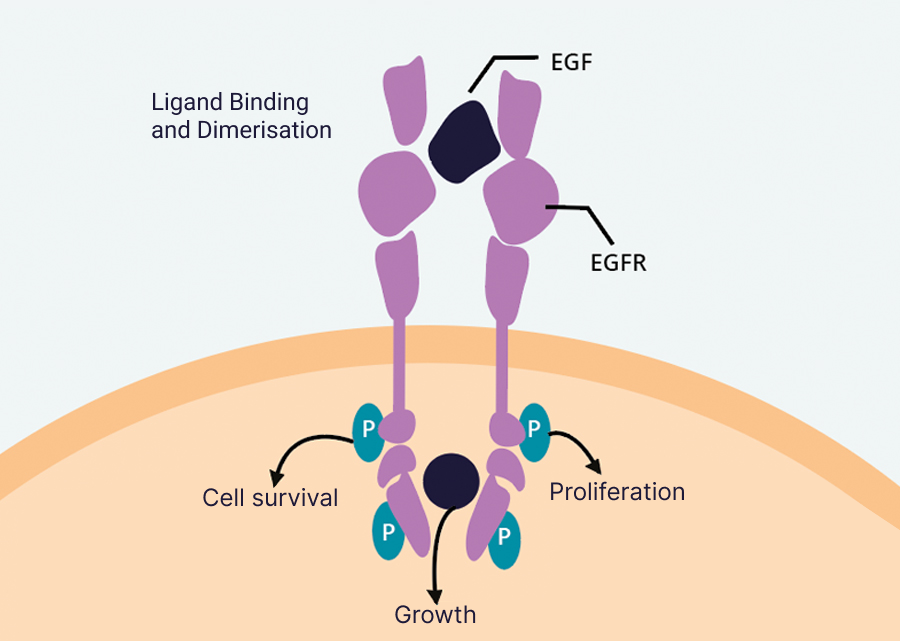
EGFR, a receptor tyrosine kinase (RTK), is a key regulator of cellular growth, survival, and differentiation. In NSCLC, mutations within in EGFR can result in constitutive activation. This in turn triggers downstream signalling pathways including RAS/MAPK, PI3K/AKT and STAT, ultimately driving aberrant growth. These EGFR mutations have become crucial biomarkers for targeted treatment selection.
Key EFGR mutations
The predominant EGFR mutations in NSCLC – also known as “classical mutations” are exon 19 deletions and L858R point mutations. Targeted Tyrosine Kinase Inhibitors (TKIs) have demonstrated success in patients with these classical EGFR mutations. Whereas non-classical EGFR mutations such as exon 20 insertions, have been associated with de novo resistance to targeted EGFR inhibitors and a poorer prognosis. This highlights the importance of understanding the EFGR mutations present for targeted therapy selection.

Evolution of NSCLC treatment
EGFR-targeted therapy has rapidly advanced, from the introduction of first generation TKIs in EGFR positive NSCLC, to third generation drugs like Osimertinib. Osimertinib, for example, addressed key resistance mechanisms such as T790M, resulting in improved long-term outcomes compared to first generation TKIs. This evolution highlights both the progress in developing targeted therapies.
Key infographic takeaways
- Key EGFR concepts including the pathway
- Evolution of targeted treatments for NSCLC
- Future directions in NSCLC research and treatment.
Download the infographic