ZR-75-1 HRAS [ZR-HRAS pool A] cell line
Contributors
| Inventor | Institute |
|---|---|
| Lambert Dorssers | Erasmus University Medical Center (Erasmus MC) |
| SKU: | 154630 |
|---|---|
| Product description: | Breast cancer is widely and effectively treated with endocrine treatment. However, in many cases the tumours will eventually progress into an estrogen-independent and therapy-resistant phenotype.Seven genes including AKT1, AKT2, BCAR1, BCAR2, BCAR3, EGFR2 and GRB7 have been shown to directly underlie estrogen independence in human breast cancer cells. This cell line is part of a panel of 16 cell lines (Cat No 154621-154635, 154642) which have been transfected with these genes, plus the parental (Cat No 154547).This cell line is a powerful tool for studying the molecular and cellular mechanisms of breast tumour progression, therapy resistance and to test the effectiveness of novel drugs to combat different modes of anti-estrogen insensitivity |
| Alternate name: | HRas Proto-Oncogene, GTPase; Transforming Protein P21 |
| Production details: | Retroviral particles containing HRAS cDNA were produced by transient transfection of Phoenix-Ampho packaging cells using FuGENE6. ZR-75-1 cells were incubated with viral particles in the presence of 4ug/ml polybrene and 1nmol/L estradiol. Three days after transfection cells were cultured in medium containing 1umol/L 4-hydroxytamoxifen. 4-hydroxytamoxifen resistant colonies were pooled and expanded. |
| Cellosaurus ID: | CVCL_E4WZ |
| Parental cell line: | ZR-75-1 |
| Disease: | Cancer |
| Cat. #: | 154630 |
|---|---|
| Tool sub type: | Continuous |
| Unit size: | 1×10^6 cells / vial |
| Cancer types: | Breast cancer |
| Research Fields: | Cancer; Drug development |
| Organism: | Human |
| Tissue: | Breast |
| Model: | Cancer Model |
| Cancer Types In Detail: | Mammary ductal carcinoma |
| Format: | Frozen |
|---|---|
| Storage conditions: | Liquid Nitrogen |
| Shipping conditions: | Dry ice |
| Growth medium: | RPMI 1640 medium supplemented with 10% heat-inactivated bovine serum (RBCS) and 1 nM 17?-estradiol |
| Mycoplasma free: | Yes |
| Biosafety level: | 1 |
| References: |
van Agthoven et al. 2010. Endocr Relat Cancer. 17(1):215-30. PMID: 19966015. |
|---|
Images
View Gallery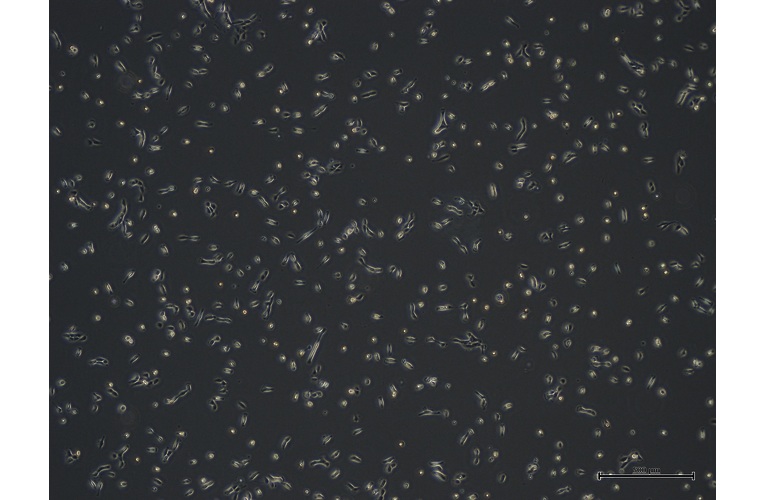
Product Images
161196.jpg