ZR-75-1 estrogen independent breast cancer cell line panel (1)
These cell lines are a powerful tool for studying the molecular and cellular mechanisms of breast tumour progression, therapy resistance and to test the effectiveness of novel drugs to combat different modes of anti-estrogen insensitivity.
Contributors
| Institute |
|---|
| Erasmus University Medical Center (Erasmus MC) |
| SKU: | 154644 |
|---|---|
| Product description: | Endocrine therapy of breast cancer has been applied widely and proven to be effective. However, in many instances endocrine treatments ultimately fail due to the development of an estrogen-independent therapy resistant phenotype. To elucidate the molecular mechanism underlying this endocrine therapy failure, the laboratory of Lambert Dorssers applied random insertional mutagenesis using defective retroviruses to identify individual genes conferring estrogen independence. Viral integrations were mapped within the human genome of the resulting panel of 71 tamoxifen-resistant cells lines (Cat No 154549-154619). Out of 15 candidate BCAR genes, seven were shown to directly underlie estrogen independence. These cell lines are a powerful tool for studying the molecular and cellular mechanisms of breast tumour progression, therapy resistance and to test the effectiveness of novel drugs to combat different modes of anti-estrogen insensitivity. In each cell line a single gene activated by the integration of the retrovirus underlies the resistant phenotype of that cell line.Since this panel of cell lines represents multiple ways to escape estrogen-dependent growth, new drugs can be tested for their effectiveness to block growth of the different escape routes. |
| Alternate name: | BCAR |
| Conditional: | No |
| Production details: | ZR-75-1 cells were infected with amphotropic, defective murine retrovirus and plated in medium containing 1uM of 4-hydroxy-tamoxifen. Within 5 weeks after the start of selection proliferating colonies were individually picked and expanded to stable cell lines. Each cell line has a unique set of retrovirus integrations, one of which is responsible for the phenotype |
| Parental cell line: | ZR-75-1 |
| Disease: | Cancer |
| Cat. #: | 154644 |
|---|---|
| Tool sub type: | Continuous |
| Unit size: | 1×10^6 cells / vial |
| Cancer types: | Breast cancer |
| Research Fields: | Cancer; Drug development |
| Organism: | Human |
| Tissue: | Breast |
| Model: | Cancer Model |
| Cancer Types In Detail: | Mammary ductal carcinoma |
| Format: | Frozen |
|---|---|
| Shipping conditions: | Dry ice |
| Growth medium: | RPMI 1640 medium supplemented with 10% heat-inactivated bovine calf serum (RBCS) |
| References: |
van Agthoven et al. 2009. Breast Cancer Res Treat. 114(1):23-30. PMID: 18351453. Dorssers et al. 1993. Mol Endocrinol. 7(7):870-8. PMID: 8413311. |
|---|
Images
View Gallery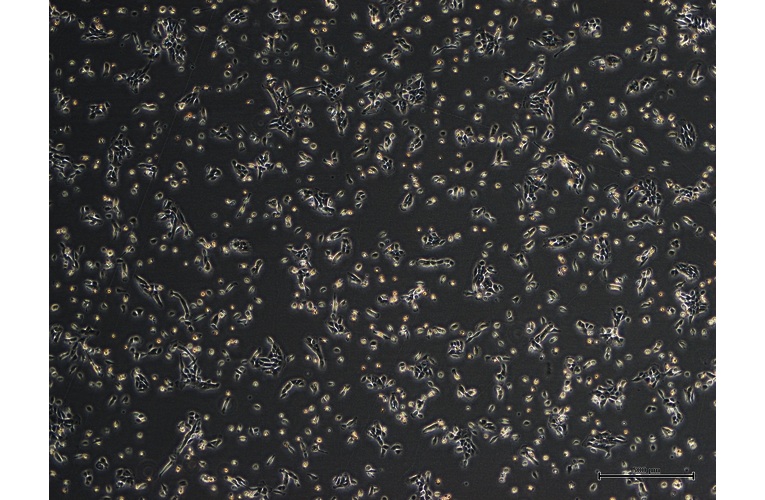
Product Images
161182.jpg