UB-UE1 Cell Line
An immortalised mouse vestibular epithelial cell model used to study inner ear development, hair cell regeneration, and sensory epithelial differentiation. Save 30% on this cell line this autumn. Use code ACA26CELL at checkout.
Contributors
| Inventor | Institute |
|---|---|
| Matthew C Holley | University of Bristol; University of Sheffield |
| SKU: | 153624 |
|---|---|
| Product description: | Derived from vestibular epithelium (utricular macula) using thermolysin treatment and dissection to ensure origin from sensory epithelial supporting cells at post-natal day P2. At this stage the supporting cells are normally post-mitotic but retain the ability to differentiate as sensory hair cells and or supporting cells. UB/UE-1 was characterised by timed expression under differentiating conditions in vitro of a combination of gene and protein markers for epithelial cells and for inner ear sensory cells. These include Cytokeratin, Vimentin, Myosin VIIa, Myosin VI, Brn3c, alpha9AChR and a combination of functional ion channels (see references). Screened with Affymetrix mouse Micro-arrays. The cells differentiate neonatal stage hair cell and supporting cell phenotypes under differentiating conditions in vitro |
| Alternate name: | UB-UE1; UB/UE-1; University of Bristol/Utricular Epithelium-1; Utricular Epithelium cell line number 1 |
| Conditional: | Yes |
| Conditional description: | Cells derived from C57 Bl6 mice carrying a stable insertion of the conditional immortalising gene H-2Kb-tsA58, which describes a temperature-sensitive variant of the SV40 immortalising gene that encodes the large tumour antigen under the control of the gamma interferon-sensitive MHC Class 1 promoter. The transgenic mouse is called the ImmortomouseTM (Jat et al 1991 Proc. Nat. Acad. Sci. USA 88, 5096-5100) |
| Cellosaurus ID: | CVCL_D807 |
| Parental cell line: | Pure utricular sensory epithelia of 2-day old immortomouse pups |
| Disease: | Hearing loss |
| Cat. #: | 153624 |
|---|---|
| Unit size: | 1×10^6 cells / vial |
| Research Fields: | Developmental biology;Drug development;Genetics |
| Organism: | Mouse |
| Model: | Immortalised Line |
| Primary citation: | Lawlor et al. 1999. J Neurosci. 19(21):9445-58. PMID: 10531448 |
| Format: | Frozen |
|---|---|
| Storage conditions: | Liquid Nitrogen |
| Shipping conditions: | Dry ice |
| Growth medium: | MEM with 10% FCS, 50Units/ml y-IFN, L-glutamine, |
| Temperature: | 33° C |
| Mycoplasma free: | Yes |
| Biosafety level: | 1 |
| References: |
Hackett et al. 2002. Exp Cell Res. 278(1):19-30. PMID: 12126954 Lawlor et al. 1999. J Neurosci. 19(21):9445-58. PMID: 10531448 |
|---|
Images
View Gallery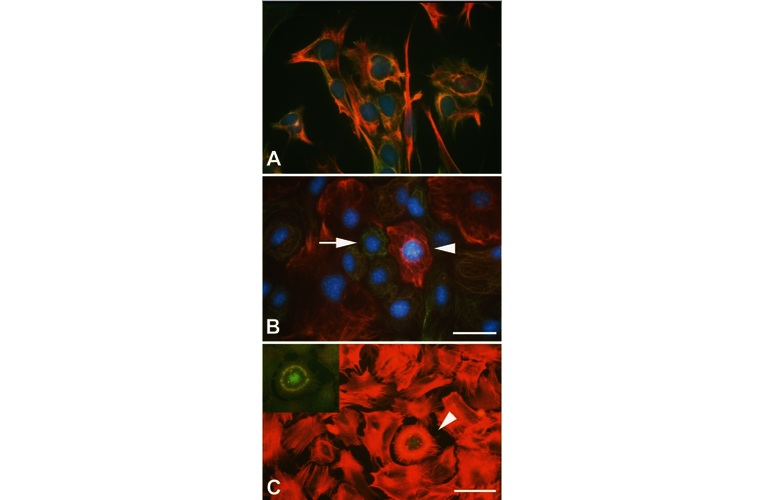
Product Images
15362420-20765×50020-201.jpg