UB-OC2 Cell Line
A mouse cochlear epithelial cell model used to study hair cell differentiation, inner ear development, and hearing loss mechanisms. Save 30% on this cell line this autumn. Use code ACA26CELL at checkout.
Contributors
| Inventor | Institute |
|---|---|
| Matthew C Holley | University of Bristol; University of Sheffield |
| SKU: | 153623 |
|---|---|
| Product description: | A conditionally immortal cell line derived from the mouse cochlea. The immortalising gene was activated in organotypic cultures of auditory sensory epithelia at E13, the thirteenth day of embryonic development, before the hair cells had started to differentiate after their last mitoses. The cell line expresses characteristic hair cell markers including the transcription factor Brn3.1, the a9 subunit of the acetylcholine receptor, the stereociliary protein fimbrin and the myosins VI and VIIA. UB/OC-2 cells have higher expression of Brn3.1, the a9AChR and myosin VIIa compared with UB/OC-1 at 33°C suggests that the former may have been immortalized at a later stage of differentiation and therefore represent committed hair cell precursors. This means that UB/OC-2 can be used specifically to study hair cell development at an early stage. At this stage they do not display the hair cell phenotype (cuticular plate, stereocilia, polarised organisation, etc.), but do express proteins specific to the hair cell transduction apparatus. |
| Alternate name: | Organ of Corti cell line number 2; UB/OC-2 |
| Conditional: | Yes |
| Conditional description: | Proliferating cultures at 33°C in the presence of γIF and differentiating cultures at 39°C in the absence of γIF due to the temperature sensitivity of the immortalising gene regulated by a γ-interferoninducible promoter |
| Production details: | Cells derived from C57/Bl6 mice carrying a stable insertion of the conditional immortalising gene H-2Kb-tsA58, which describes a temperature-sensitive variant of the SV40 immortalising gene that encodes the large tumour antigen under the control of the Î?âinterferon-sensitive MHC Class 1 promoter. The transgenic mouse is called the Immortomouseâ? (Jat et al 1991 Proc. Nat. Acad. Sci. USA 88, 5096-5100) |
| Cellosaurus ID: | CVCL_D790 |
| Parental cell line: | Primary cultures of the developing organs of Corti of E13 embryonic Immortomouseâ? |
| Disease: | Hearing loss |
| Cat. #: | 153623 |
|---|---|
| Tool sub type: | Continuous |
| Unit size: | 1×10^6 cells / vial |
| Organism: | Mouse |
| Tissue: | Developing organs of Corti |
| Model: | Conditionally immortalised |
| Primary citation: | Rivolta et al. 1998. Proc Biol Sci. 265(1406):1595-603. PMID: 9753783 |
| Format: | Frozen |
|---|---|
| Storage conditions: | Store in LN2 after a short period at -80° C |
| Shipping conditions: | Dry ice |
| Growth medium: | MEM with 10% FCS, 50Units/ml y-IFN, L-glutamine |
| Temperature: | 33° C |
| Atmosphere: | 5% CO2 |
| Storage medium: | Pure Foetal Calf serum with 10% DMSO |
| Mycoplasma free: | Yes |
| Biosafety level: | 1 |
| References: |
Fritzsche et. al. Int J Mol Sci. 2022 May 21, 23(10):5780. PMID: 35628594 Clough et al. 2004. Biochem Biophys Res Commun. 324(1):372-81. PMID: 15465029 Jagger et al. 2000. J Physiol. 527(Pt 1):49-54. PMID: 10944169 Jagger et al. 1999. Pflugers Arch. 438(1):8-14. PMID: 10370081 Rivolta et al. 1998. Proc Biol Sci. 265(1406):1595-603. PMID: 9753783 |
|---|
Images
View Gallery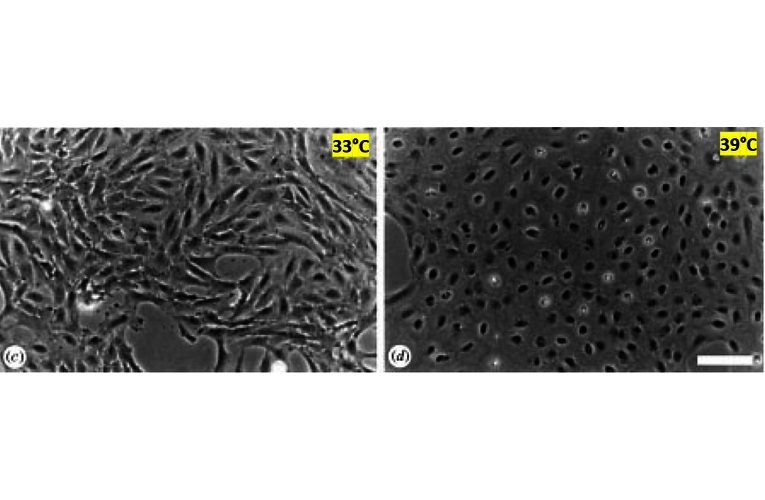
Product Images
UB-OC2 Cell Line
 Powered by Bioz