HGS2 cell line
Exclusive toolA murine, syngeneic BRCA2-deficient high-grade serous ovarian cancer model used to study homologous recombination deficiency, tumour-microenvironment interactions, and platinum/PARP inhibitor sensitivity. Exclusive to CancerTools. Save 30% on this cell line this autumn. Use code ACA26CELL at checkout.
Contributors
| Inventor | Institute |
|---|---|
| Frances Balkwill | Queen Mary University of London |
| SKU: | 160538 |
|---|---|
| Product description: | HGS2 is a genetically engineered mouse model-derived murine high-grade serous ovarian cancer cell line with Tp53, Pten and Brca2 loss. Developed from an immunocompetent mouse model, it provides a syngeneic platform for studying homologous recombination-deficient ovarian cancer biology, platinum and PARP inhibitor sensitivity, and tumour–immune interactions. As part of the HGS1–4 series, HGS2 complements related murine high-grade serous ovarian cancer models for comparative studies of tumour–microenvironment biology, therapeutic response and metastatic spread. |
| Alternate name: | ovarian cancer, tumour microenvironment, matrisome, serous, mouse model |
| Conditional: | Yes |
| Production details: | The HGS2 cell line was established from dissociated fragments of the fallopian tubes and ovaries from a Pax8-rtTA; TetO-Cre; Trp53fl/fl; Ptenfl/fl; Brca2fl/fl mouse. Individual tumours were collected in cold PBS, minced with a scalpel, and incubated with 1 mg/ml collagenase type I (Fisher, 17018-029). After being split once onto collagen-coated plates, cells were transferred into Primaria flasks (Corning) and then propagated as polyclonal lines on normal cell-culture plastic (Corning). Complete medium was DMEM:F12 1:1 with GlutaMax (GIBCO) with the addition of 4% FBS (Hyclone), 1x Pen/Strep (Invitrogen), 1x insulin/transferrin/selenium (Invitrogen, 51300), 100 ng/ml hydrocortisone (Sigma, H0135), 20 ng/ml murine Epidermal Growth Factor (EGF, Sigma, E4127), 1x antibiotic-antimycotic (GIBCO). Cells were trypsinized with 0.05% trypsin-EDTA (GIBCO). 60577 and 30200 cell lines were derived and cultured as described (Szabova et al., 2014).Orthotopic tumor growth: Cell lines were trypsinized, washed in medium, and resuspended in PBS to 10×106 cells in 300 μl injected i.p. into 8-week old FVB mice (60577, 30200) or 6-7-week old C57BL/6J mice (HGS1-4) from Charles River, UK. Mice were treated with 2 mg/kg anti-IL-6 or isotype control (BioXCell) twice weekly i.p., starting three weeks (60577 model), ten weeks (30200 model) or seven weeks (HGS2 model) after cell injection, until the end of the experiment. Carboplatin (20 mg/kg) was administered i.p. once a week for three weeks starting at week 3 (60577 model), or week 8 (HGS2 model). |
| Cellosaurus ID: | CVCL_B5GW |
| Disease: | Cancer;Ovarian cancer;High Grade Serous Epithelial Ovarian cancer |
| Cat. #: | 160538 |
|---|---|
| Provenance and Ownership: | The HGS2 cell line is owned by Cancer Research UK. CancerTools supplies the HGS2 cell line under licence from Cancer Research UK and is the authorised source for its distribution. Sourcing HGS2 cell line directly from the IP owner ensures authenticity, provenance and compliance with all applicable licensing and research use requirements. |
| Unit size: | 1×10^6 cells / vial |
| Cancer types: | Ovarian cancer |
| Research Fields: | Cancer |
| Organism: | Mouse |
| Tissue: | fallopian tube, ovarian, or peritoneal tumour tissues |
| Model: | Cancer Model |
| Cancer Types In Detail: | High Grade Serous Epithelial Ovarian;High-Grade Serous Ovarian (HGSOC) |
| Format: | Frozen |
|---|---|
| Storage conditions: | Liquid Nitrogen |
| Shipping conditions: | Dry ice |
| Growth medium: | DMEM:F12 1:1 with GlutaMax (GIBCO) with the addition of 4% FBS (Hyclone), 1x Pen/Strep (Invitrogen), 1x insulin/transferrin/selenium (Invitrogen, 51300), 100 ng/ml hydrocortisone (Sigma, H0135), 20 ng/ml murine Epidermal Growth Factor (EGF, Sigma, E4127), 1x antibiotic-antimycotic (GIBCO). |
| Mycoplasma free: | Yes |
| Biosafety level: | 1 |
| References: |
Maniati et al. 2020. Cell Rep. 30(2):525-540.e7. PMID: 31940494. |
|---|
Images
View Gallery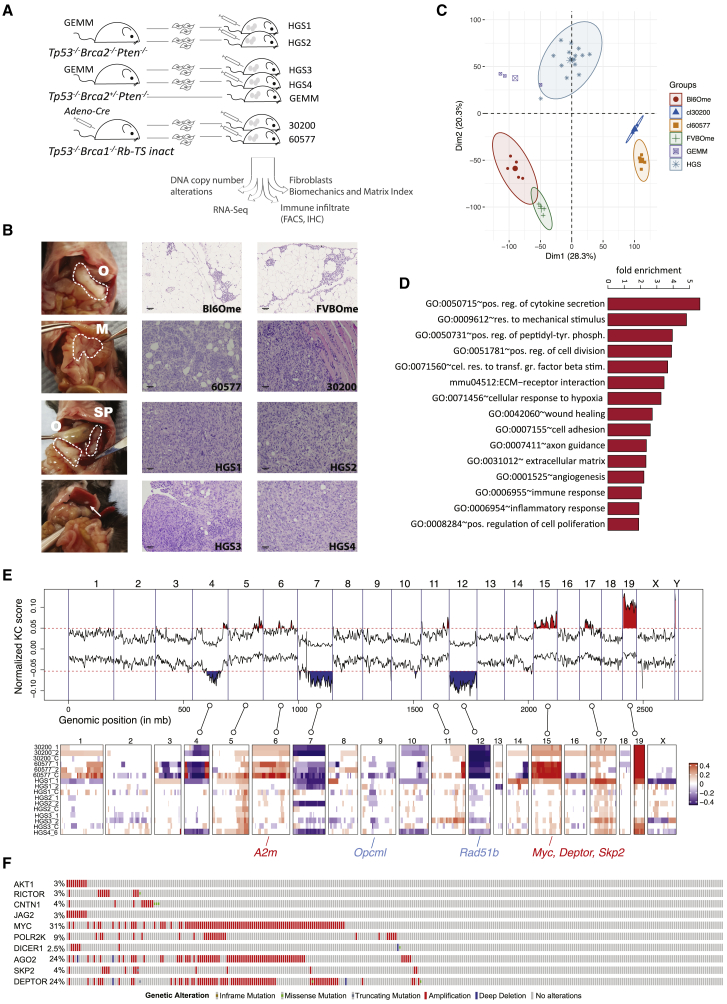
Product Images
Figure 1. Characterization of Murine HGSOC Models (A) Overview of murine models and the analyses conducted. (B) Left panel
Figure 1. Characterization of Murine HGSOC Models (A) Overview of murine models and the analyses conducted. (B) Left panel
 Powered by Bioz