Holiday shipping dates:
Last international orders dispatched: Friday 11th December
Last UK domestic orders dispatched: Wednesday 16th December
Following the holiday period, shipping will resume as normal from the week commencing Monday 4th January 2027
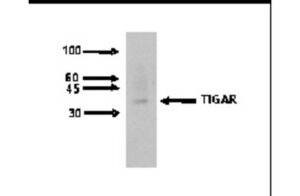
Anti-TIGAR [M2-P4H2]
This suggests a role for TIGAR in protecting cells from reactive oxygen species that can be DNA damaging and lead to apoptosis.
Contributors
| Inventor | Institute |
|---|---|
| Ayham Alnabulsi | Vertebrate Antibodies Limited |
| SKU: | 151870 |
|---|---|
| Product description: | TIGAR (TP53 (tumor protein 53)-induced glycolysis and apoptosis regulator), also known as C12orf5, is a 270 amino acid protein induced by the p53 tumor suppressor pathway that functions to protect against oxidative stress. TIGAR shares sequence similarity with the bisphosphate domain of the fructose- 2,6-bisphosphate degrading enzyme (fructose bisphosphatase or FBPase) of the glycolysis pathway and can thus lower the intracellular levels of fructose- 2,6-bisphosphate. TIGAR specifically functions to block glycolysis, leading the pathway to the pentose phosphate shunt and decreasing the intracellular concentration of reactive oxygen species. This suggests a role for TIGAR in protecting cells from reactive oxygen species that can be DNA damaging and lead to apoptosis. |
| Conjugation: | Unconjugated |
| Isotype: | IgG1 kappa |
| Immunogen: | Synthetic peptide; IINFEEGREV (amino acids 239-248) |
| Myeloma used: | P3X63Ag8.653 |
| Cat. #: | 151870 |
|---|---|
| Tool sub type: | Primary antibody |
| Unit size: | 100 ug |
| Research Fields: | Apoptosis and autophagy; Cancer; Genetics |
| Application: | ELISA ; IHC ; IF ; WB |
| Target: | TP53-induced glycolysis and apoptosis regulator (TIGAR) |
| Reactivity: | Human |
| Clone: | M2-P4H2 |
| Host: | Mouse |
| Class: | Monoclonal |
| Target background: | TIGAR (TP53 (tumor protein 53)-induced glycolysis and apoptosis regulator), also known as C12orf5, is a 270 amino acid protein induced by the p53 tumor suppressor pathway that functions to protect against oxidative stress. TIGAR shares sequence similarity with the bisphosphate domain of the fructose-2,6-bisphosphate degrading enzyme (fructose bisphosphatase or FBPase) of the glycolysis pathway and can thus lower the intracellular levels of fructose-2,6-bisphosphate. TIGAR specifically functions to block glycolysis, leading the pathway to the pentose phosphate shunt and decreasing the intracellular concentration of reactive oxygen species. This suggests a role for TIGAR in protecting cells from reactive oxygen species that can be DNA damaging and lead to apoptosis. |
|---|
| Format: | Liquid |
|---|---|
| Concentration: | 1 mg/ml |
| Storage buffer: | PBS with 0.02% azide |
| Storage conditions: | -15° C to -25° C |
| Shipping conditions: | Dry ice |
Images
View Gallery


Product Images
4d6c83a5-03d9-48cd-86dc-3c357a0c06d5
6f4502f4-a528-47b3-b8c4-ef57ff106106
c49fd127-af63-48cf-a637-68dd2812e078
085c53eb-352c-4891-bc51-c291ac693d6f.jpg
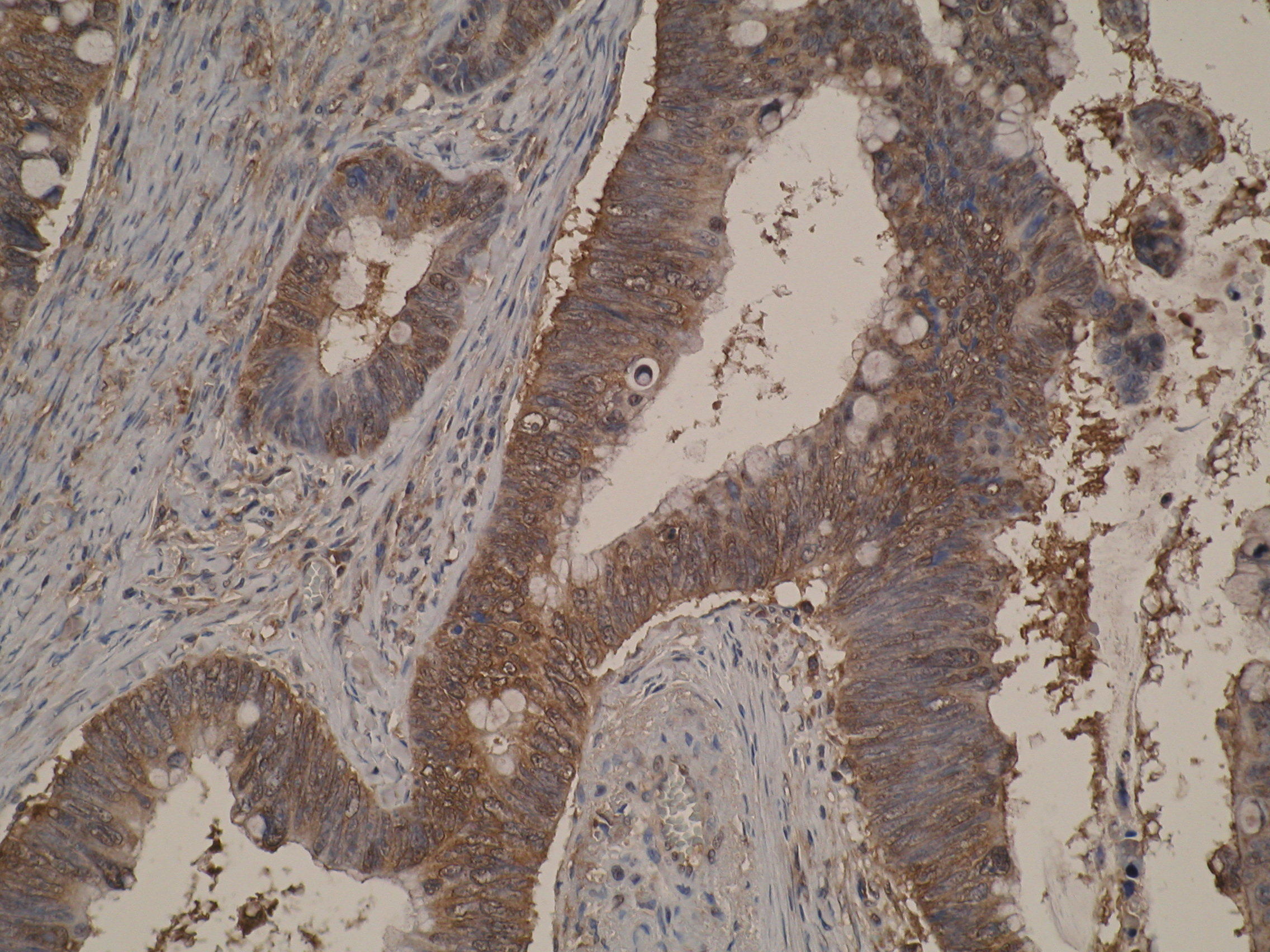
Immunohistochemistry