Anti-p53 [Pab DO-7]
Anti p53 monoclonal antibody used to analyse and detect the most mutated gene in cancer’ p53, enabling identification of transformed cell lines.
Contributors
| Inventor | Institute |
|---|---|
| David Lane | University of Dundee |
| SKU: | 151293 |
|---|---|
| Product description: | A monoclonal p53 antibody, the epitope recognised by DO-7 is in the N terminus of p53. DO-7 can detect wild-type and mutant p53. DO-7 recognises three of the p53 isoforms (p53, p53beta, p53gamma). |
| Conjugation: | Unconjugated |
| Isotype: | IgG2b |
| Molecular weight: | 53 kDa |
| Immunogen: | p53 |
| Immunogen Uniprot ID: | P04637 |
| Cat. #: | 151293 |
|---|---|
| Tool sub type: | Primary antibody |
| Unit size: | 100 ug |
| Cancer types: | Other |
| Research Fields: | Apoptosis and autophagy;Cancer;Cell biology;Genetics |
| Application: | ELISA ; FACS ; IHC ; IF ; WB |
| Target: | p53 (N terminus) |
| Reactivity: | Human |
| Clone: | Pab DO-7 |
| Host: | Mouse |
| Class: | Monoclonal |
| Primary citation: | Vojtesek et al. 1992. J Immunol Methods. 151(1-2):237-44. PMID: 1378473 |
| Target background: | p53 is a crucial tumour suppressor involved in over 50% of cancers. It acts as a stress-responsive transcription factor and plays a vital role in regulating cell cycle arrest, promoting apoptosis, maintaining genomic stability, controlling the cell cycle, and inhibiting angiogenesis. Known as the “guardian of the genome,” p53 prevents gene mutations. Mutations in the p53 gene are common in human cancers, resulting in dysfunctional proteins unable to bind to DNA. This loss of fun… |
|---|
| Format: | Liquid |
|---|---|
| Concentration: | 1 mg/ml |
| Storage buffer: | PBS with 0.02% azide |
| Storage conditions: | Store at -20° C frozen. Avoid repeated freeze / thaw cycles |
| Shipping conditions: | Dry ice |
| References: |
Grass et al. 2019. Leuk Lymphoma. 60(4):886-893. PMID: 30457458. Elsensohn et al. 2018. Am J Surg Pathol. 42(3):372-375. PMID: 29112020 Kanda et al. 2018. BMC Cancer. 18(1):657. PMID: 29907137. Murnyk et al. 2017. Oncotarget. 8(28):46348-46362. PMID: 28654422. Gavressea et al. 2017. Anticancer Res. 37(6):2947-2957. PMID: 28551632. Ilhan et al. 2016. J Vet Diagn Invest. PMID: 27016721. Alsafadi et al. 2016. Oncotarget. 7(11):12331-43. |
|---|
Images
View Gallery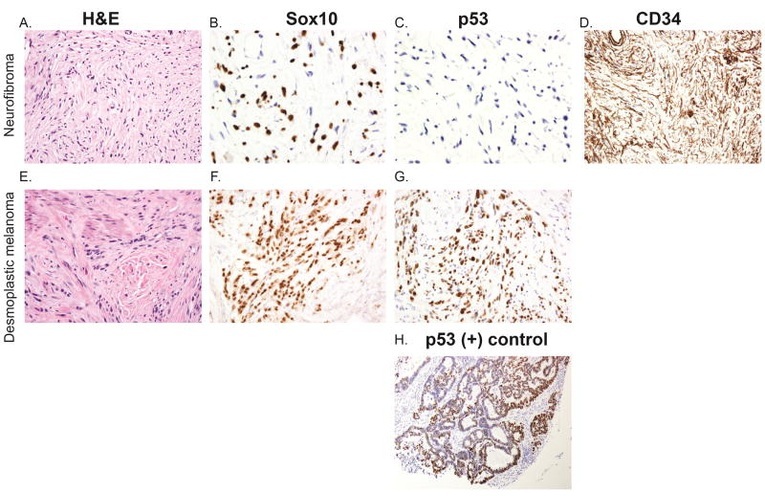
Product Images
15129320765×500.jpg