Anti-NCAM [ERIC-1]
Exclusive toolNCAM, also known as CD56, is a homophillic binding glycoprotein present on a variety of neural cells including neurons, glia, skeletal muscle and natural killer cells.
Contributors
| Inventor | Institute |
|---|---|
| John Kemshead | Institute of Child Health |
| SKU: | 151092 |
|---|---|
| Product description: | NCAM, also known as CD56, is a homophillic binding glycoprotein present on a variety of neural cells including neurons, glia, skeletal muscle and natural killer cells. NCAM has been implicated as having a role in cell-cell adhesion, neurite outgrowth, synatptic plasticity, learning and memory and in the development of the nervous system. |
| Alternate name: | Neural Cell Adhesion Molecule; NCAM; CD56 Antigen; MSK39 |
| Conjugation: | Unconjugated |
| Isotype: | IgG1 |
| Molecular weight: | 180 kDa, 140 kDa, 120 kDa |
| Immunogen: | Retinoblastoma tissue membrane fraction |
| Myeloma used: | P3X63Ag8.653 |
| Cat. #: | 151092 |
|---|---|
| Provenance and Ownership: | The Anti-NCAM [ERIC-1] is owned by Cancer Research UK. CancerTools supplies the Anti-NCAM [ERIC-1] under licence from Cancer Research UK and is the authorised source for its distribution. Sourcing Anti-NCAM [ERIC-1] directly from the IP owner ensures authenticity, provenance and compliance with all applicable licensing and research use requirements. |
| Tool sub type: | Primary antibody |
| Unit size: | 100 ug |
| Cancer types: | Brain cancer |
| Research Fields: | Cell biology; Cell signaling and signal transduction; Neurobiology; Stem cell biology |
| Application: | ELISA ; FACS ; IHC ; IF ; IP ; RIA ; WB |
| Target: | Neural Cell Adhesion Molecule (NCAM; CD56) |
| Reactivity: | Human |
| Clone: | ERIC-1 |
| Host: | Mouse |
| Class: | Monoclonal |
| Primary citation: | Bourne et al. 1991. J Neurooncol. 10(2):111-9. PMID: 1895159. |
| Target background: | NCAM, also known as CD56, is a homophillic binding glycoprotein present on a variety of neural cells including neurons, glia, skeletal muscle and natural killer cells. NCAM has been implicated as having a role in cell-cell adhesion, neurite outgrowth, synatptic plasticity, learning and memory and in the development of the nervous system. |
|---|
| Format: | Liquid |
|---|---|
| Concentration: | 1 mg/ml |
| Storage buffer: | PBS with 0.02% azide |
| Storage conditions: | -15° C to -25° C |
| Shipping conditions: | Dry ice |
| References: |
Markovic-Lipkovski et al. 2015. PLoS One. 10(9):e0137028. PMID: 26327314. Variable Expression of Neural Cell Adhesion Molecule Isoforms in Renal Tissue: Possible Role in Incipient Renal Fibrosis. Klehr et al. 2009. J Immunother. 32(5):442-51. PMID: 19609236. The novel chimeric anti-NCAM (neural cell adhesion molecule) antibody ch.MK1 displays antitumor activity in SCID mice but does not activate complement-dependent cytolysis (CDC). Pruszak et al. 2007. Stem Cells. 25(9):2257-68. PMID: 17588935. Markers and methods for cell sorting of human embryonic stem cell-derived neural cell populations. Blaheta et al. 2004. Neoplasia. 6(4):323-31. PMID: 15256054. Human cytomegalovirus infection of tumor cells downregulates NCAM (CD56): a novel mechanism for virus-induced tumor invasiveness. Jensen et al. 2003. Clin Exp Immunol. 134(2):253-63. PMID: 14616785. The bi-specific CD3 x NCAM antibody: a model to preactivate T cells prior to tumour cell lysis. Gerardy-Schahn et al. 1994. Int J Cancer Suppl. 8:38-42. PMID: 7515028. Hot spots of antigenicity in the neural cell adhesion molecule NCAM. Phimister et al. 1991. J Clin Pathol. 44(7):580-5. PMID: 1856291. Expression of neural cell adhesion molecule (NCAM) isoforms in neuroblastoma. Frost et al. 1991. Neuropathol Appl Neurobiol. 17(3):207-17. PMID: 1891065. Expression of alternative isoforms of the neural cell adhesion molecule (NCAM) on normal brain and a variety of brain tumours. Bourne et al. 1991. J Neurooncol. 10(2):111-9. PMID: 1895159. A monoclonal antibody (ERIC-1), raised against retinoblastoma, that recognizes the neural cell adhesion molecule (NCAM) expressed on brain and tumours arising from the neuroectoderm. |
|---|
Images
View Gallery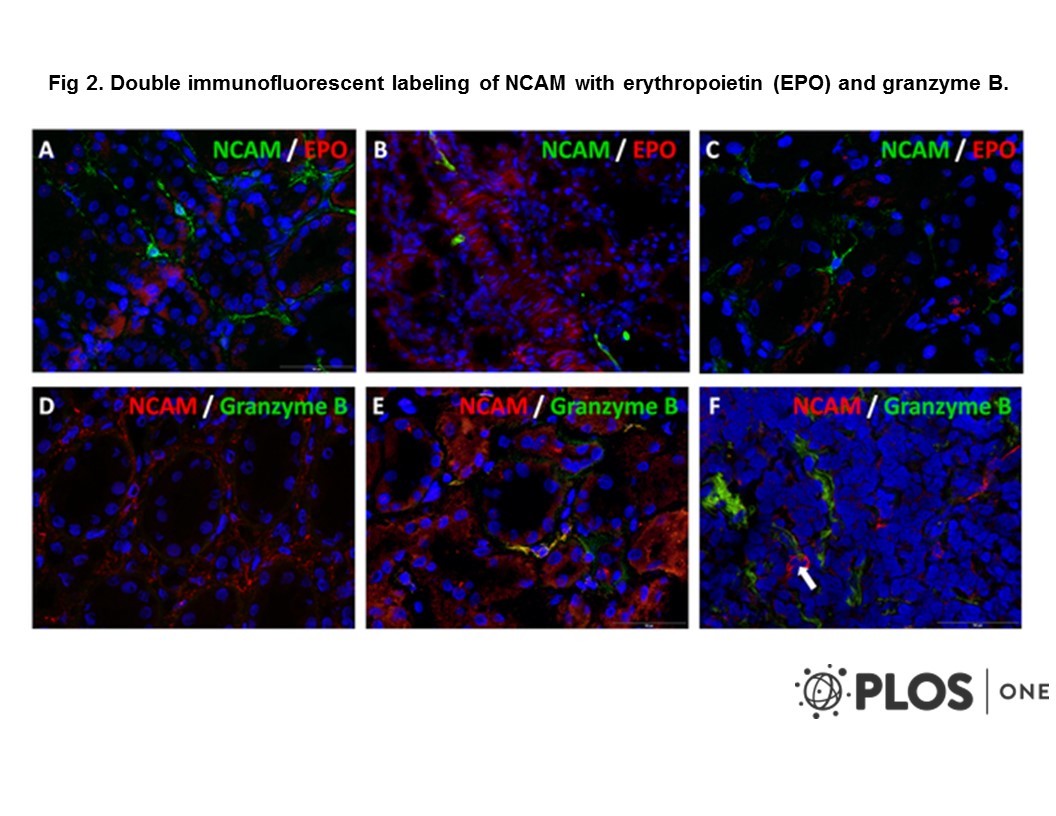
Product Images
6fe52fcc-ae92-43ee-9abb-ffcc3039d06e.jpg
Adapted from Markovi?-Lipkovski et al. 2015. PLoS One. 10(9)