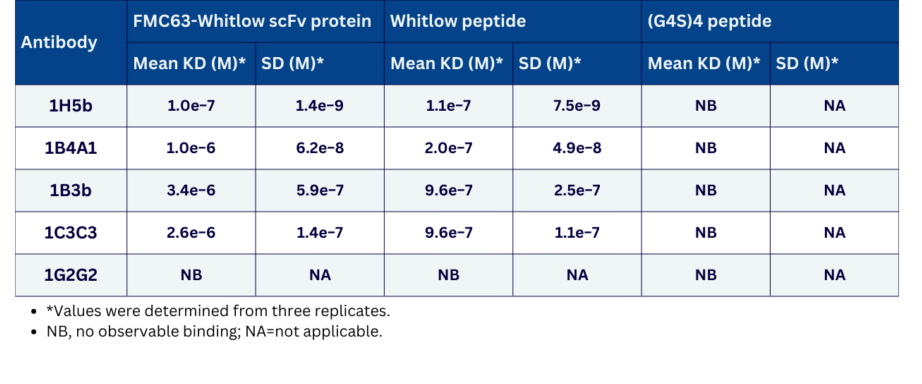
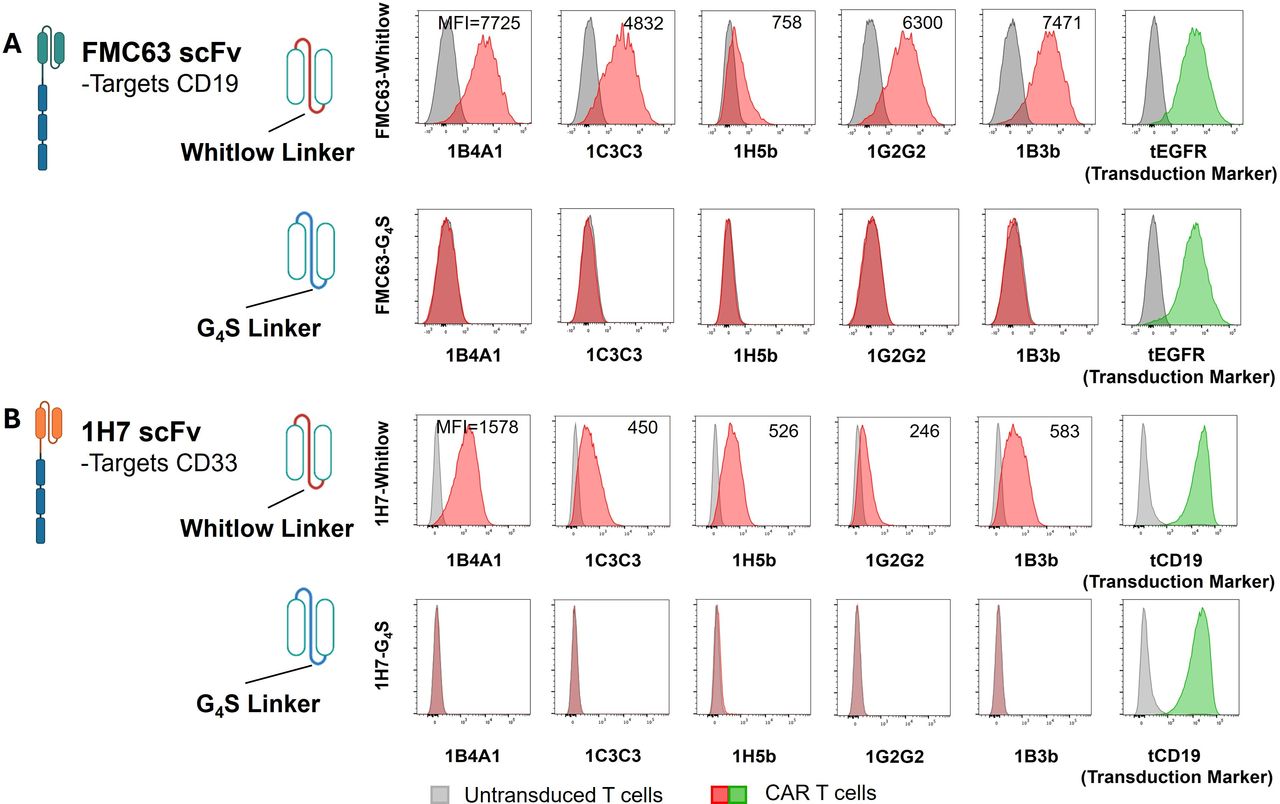
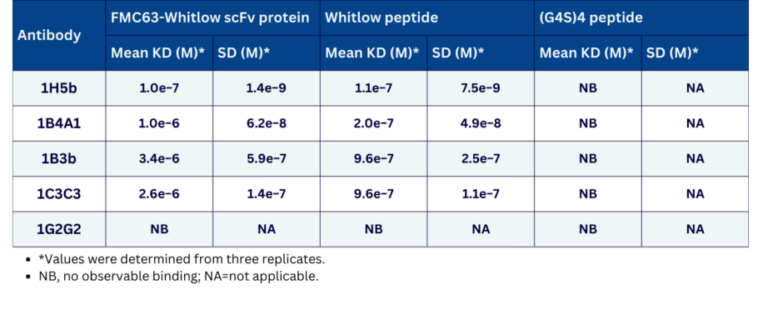
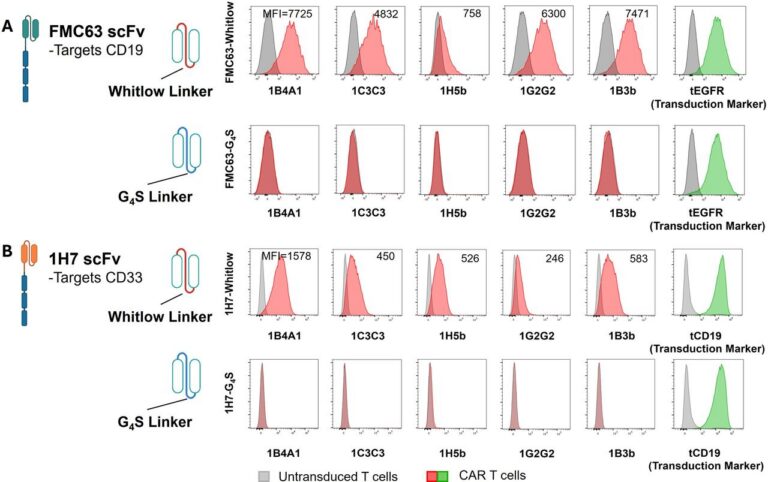
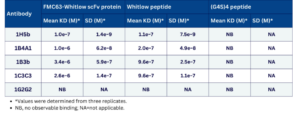
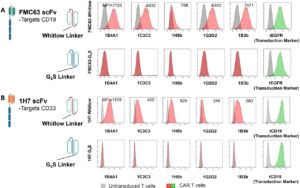
The anti-CAR Whitlow linker peptide 1G2G2 clone has been developed to detect cells expressing Whitlow linker-containing CARs with different antigen specificities, including those harbouring the widely employed anti-CD19 FMC63-derived scFv as well as other scFvs, such as those targeting B-cell maturation antigen (BCMA) or CD33. Although it has been demonstrated to bind CAR-engineered T cells expressing the Whitlow peptide using FACS analysis, 1G2G2 showed no reactivity to FMC63-Whitlow scFv protein and the Whitlow peptide in binding kinetic studies using recombinant proteins.
Kimble et al. 2025.J Immunother Cancer. 2025 Nov 18;13(11):e013123. PMID: 41253496
Target background:
While CAR T-cell therapies have revolutionized the treatment of B-lineage malignancies, high-resolution tracking of CAR-engineered cells within the tumor microenvironment (TME) remains a significant technical challenge, particularly in archival formalin-fixed paraffin-embedded (FFPE) tissues. To address this, murine monoclonal antibodies (mAbs) have been developed to specifically target the Whitlow linker, a synthetic peptide commonly utilized in the scFv domains of multiple FDA-approved CAR products (e.g., axi-cel, liso-cel). Because this linker is absent in native human tissue and conserved across various antigen specificities, these mAbs provide a universal tool for the in situ identification, selection, and functional analysis of CAR-expressing cells. This methodology enables a more precise evaluation of CAR T-cell infiltration, persistence, and correlation with clinical outcomes or toxicities.
Please ensure you use your organisation email address rather than personal where possible, as this helps us locate your organisation in our system faster.
Please note we may take up to three days to respond to your enquiry.
CancerTools.org uses the contact information provided to respond to you about our research tools and service. For more information please review our privacy policy.