TR146 Cell Line
Exclusive toolA human buccal squamous cell carcinoma cell line used to study oral drug delivery, mucosal barrier function, and head and neck cancer biology. Available exclusively through CancerTools.
Contributors
| Inventor | Institute |
|---|---|
| Bridget Hill | Cancer Research UK, London Research Institute: Lincoln's Inn Fields |
| SKU: | 151425 |
|---|---|
| Product description: | Cell line to investigate buccal mucosa, and as a model for absorption and metabolism of various substances and enzymatically labile drugs. |
| Alternate name: | Tr146; TR-146; TR 146 |
| Gender: | Female |
| CRISPR: | No |
| Conditional: | Yes |
| Production details: | The TR146 cell line originates from a human neck metastasis of a buccal carcinoma, derived from neck node (primary tumour sited in buccal mucosa). Well-differentiated. Female patient, 67 years. Previous radiotherapy (6,000 rads) and neck dissection |
| Additional notes: | Histology: well-differentiated keratinizing squamous cell carcinoma. Cell type: polygonal |
| Cellosaurus ID: | CVCL_2736 |
| Model description: | TR146 cell ine is tumourigenic in female (nu/nu) mice resulting in the production of rapidly progressing tumours |
| Disease: | Cancer |
| Cat. #: | 151425 |
|---|---|
| Provenance and Ownership: | The TR146 Cell Line is owned by Cancer Research UK. CancerTools supplies the TR146 Cell Line under licence from Cancer Research UK and is the authorised source for its distribution. Sourcing TR146 Cell Line directly from the IP owner ensures authenticity, provenance and compliance with all applicable licensing and research use requirements. |
| Unit size: | 1×10^6 cells / vial |
| Research Fields: | Cancer;Drug development;Metabolism |
| Organism: | Human |
| Tissue: | Buccal mucosa that had infiltrated a lymph node |
| Gender: | Female |
| Model: | Tumourigenic cell line |
| Growth properties: | Adherent |
| Cancer Types In Detail: | Human neck metastasis |
| Primary citation: | Rupniak et al. 1985. J Natl Cancer Inst. 75(4):621-35. PMID: 2413234 |
| Format: | Frozen |
|---|---|
| Storage conditions: | Liquid Nitrogen |
| Shipping conditions: | Dry ice |
| Growth medium: | HAMS F12 + 2mM Glutamine + 10% Foetal Bovine Serum (FBS) |
| Subculture routine: | Split sub-confluent cultures (70-80%) seeding at approximately 1-2 x 10^4 cells/cm2 using 0.05% trypsin or trypsin/EDTA; 5% CO2; 37°C. Cells can reach a maximum density of 7 x 10^4 cells/cm2. Please also see detailed protocol within the Product Datasheet in the Documentation section below. |
| Temperature: | 37°C |
| Atmosphere: | 5% CO2 |
| Mycoplasma free: | Yes |
| Biosafety level: | 1 |
| References: |
Lin et. al. 2021. Pharmaceutics 13(2):256. PMID: 33673378 Mogavero and Hube. 2021. Methods Mol Biol 2260:133-143. PMID: 33405035 Lin et. al. 2020. Tissue Barriers 8(2): 1784644. PMID: 32614652 Rupel et.al. 2019. NPJ Biofilms Microbiomes. 5: 29. PMID: 31602310 Laurén et.al. 2018. Pharm Res. 22,35(7):145. PMID 29790010 Kalu et al. 2017. Oncotarget. 8(49):86369-86383. PMID: 29156801 Li et al. 2017. Cancer Cell. 31(2):225-239. PMID: 28196595 Pistone et al. 2016. Eur J Pharm Sci. 96:381-389. PMID: 27721043 Nilsen et al. 2016. Eur J Oral Sci. :. PMID: 27711994 Iyire et al. 2016. Sci Rep. 6:32498. PMID: 27581177 Goyer et al. 2016. PLoS One. 11(3):e0149159. PMID: 26933885 Hyakusoku et al. 2016. J Exp Clin Cancer Res. 35:6. PMID: 26754630 Zeng et al. 2015. Int J Pharm. 495(2):1028-37. PMID: 26403384 De Ryck et al. 2015. AMB Express. 5:27. PMID: 25995981 O'Callaghan et al. 2015. Mol Med Rep. :. PMID: 26005189 Chai et al. 2012. J R Soc Interface. 9(77):3528-38. PMID: 22915635 Mrck Nielsen et al. 2000. Int J Pharm. 200(2):261-70. PMID: 10867256 Nielsen et al. 2000. Int J Pharm. 194(2):155-67. PMID: 10692640 Jacobsen et al. 1999. Eur J Pharm Biopharm. 48(3):217-24. PMID: 10612032 Nielsen et al. 1999. Int J Pharm. 185(2):215-25. PMID: 10460917 Nielsen et al. 1999. J Control Release. 60(2-3):223-33. PMID: 10425328 Pedersen et al. 1999. Drug Dev Ind Pharm. 25(4):463-70. PMID: 10194601 Jacobsen et al. 1999. Eur J Oral Sci. 107(2):138-46. PMID: 10232463 Rupniak et al. 1985. J Natl Cancer Inst. 75(4):621-35. PMID: 2413234 |
|---|
Images
View Gallery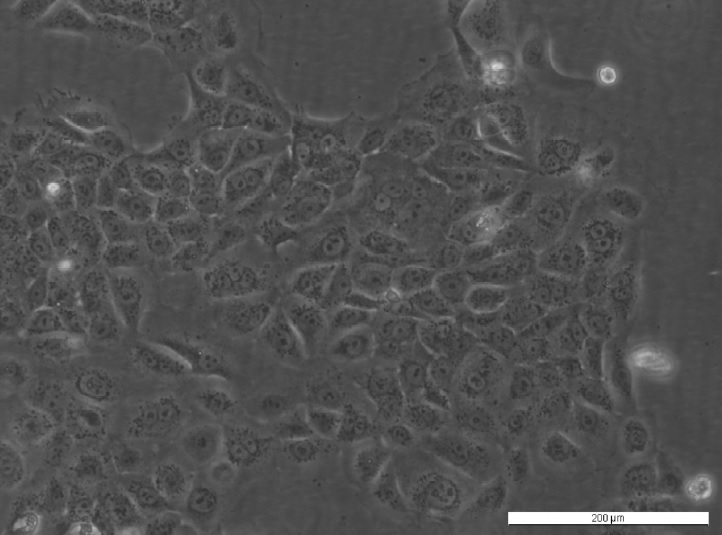
Product Images
TR146 Cell Line. 3 days post plating. Image courtesy of the European Collection of Authenticated Cell Cultures (ECACC)
Citations And Reviews
 Powered by Bioz
 Related Tools for Cell lines
| Cat. # | Tool Name | |||||||||
|---|---|---|---|---|---|---|---|---|---|---|
| 156371 | Plasmax™ cell culture medium |
Key Info
Plasmax™ cell culture medium
|
View Tool | |||||||