Anti-AP2a [AP2a 8G8/5]
AP-2 is a family of developmentally regulated transcription factors which also play a role in breast cancer and melanoma. AP-2? may be important in cardiac and kidney development. The AP-2 transcription factors form the OB2 complex that has been shown to up-regulate c-erb-B2 transcription.
Contributors
| Inventor | Institute |
|---|---|
| Helen Hurst | Queen Mary University of London |
| SKU: | 151254 |
|---|---|
| Product description: | AP-2 is a family of developmentally regulated transcription factors which also play a role in breast cancer and melanoma. AP-2?ĂÂ may be important in cardiac and kidney development. The AP-2 transcription factors form the OB2 complex that has been shown to up-regulate c-erb-B2 transcription. |
| Conjugation: | Unconjugated |
| Isotype: | IgG1 |
| Molecular weight: | 50 kDa |
| Immunogen: | Bacterialy expressed AP-2a/AP-2g fusion protein. |
| Myeloma used: | Sp2/0-Ag14 |
| Cat. #: | 151254 |
|---|---|
| Tool sub type: | Primary antibody |
| Unit size: | 100 ug |
| Research Fields: | Cancer; Genetics; Tissue-specific biology |
| Application: | ChIP ; IHC ; WB |
| Target: | Activating Protein 2 (AP-2) alpha (Human) |
| Reactivity: | Human |
| Clone: | AP2a 8G8/5 |
| Host: | Mouse |
| Class: | Monoclonal |
| Target background: | AP-2 is a family of developmentally regulated transcription factors which also play a role in breast cancer and melanoma. AP-2? may be important in cardiac and kidney development. The AP-2 transcription factors form the OB2 complex that has been shown to up-regulate c-erb-B2 transcription. |
|---|
| Format: | Liquid |
|---|---|
| Concentration: | 0.82 mg/ml |
| Storage buffer: | PBS with 0.02% azide |
| Storage conditions: | -15° C to -25° C |
| Shipping conditions: | Dry ice |
| References: |
Nordentoft et al. 2011. BMC Cancer. 11:135. PMID: 21489314. Increased expression of transcription factor TFAP2a correlates with chemosensitivity in advanced bladder cancer. Bennett et al. 2009. PLoS One. 4(9):e6931. PMID: 19742317. AP-2alpha induces epigenetic silencing of tumor suppressive genes and microsatellite instability in head and neck squamous cell carcinoma. |
|---|
Images
View Gallery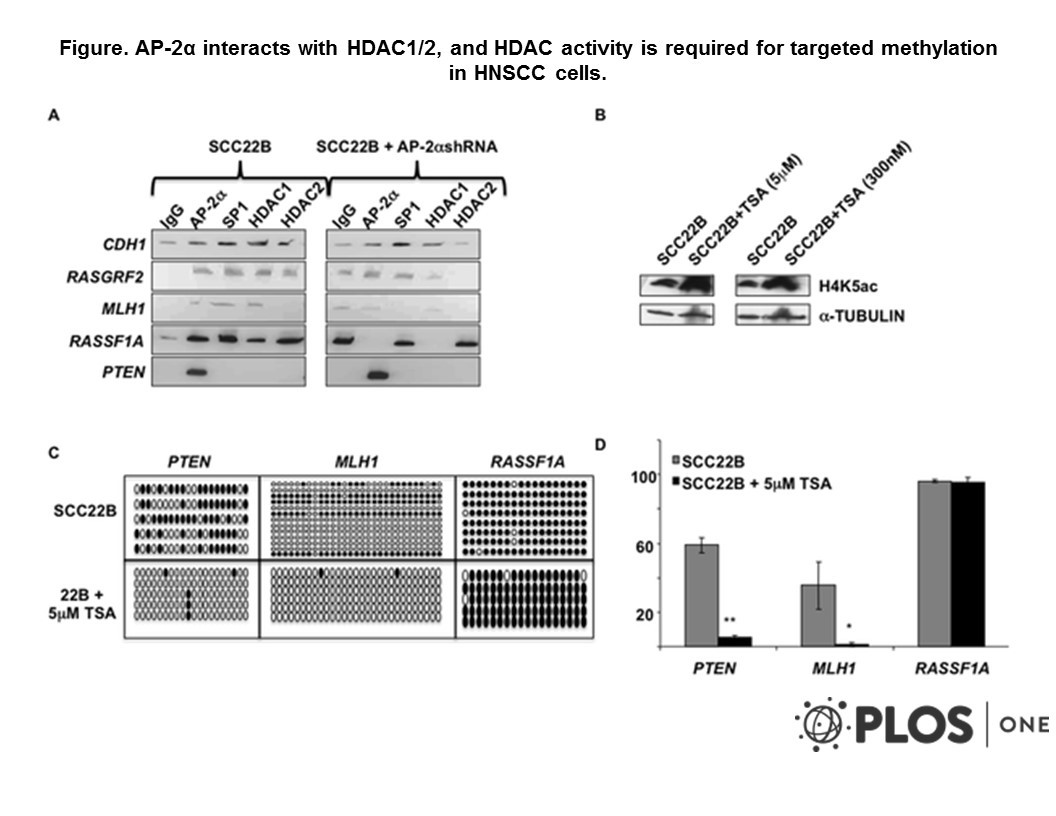
Product Images
9f162771-3551-4757-aad3-55c9a0249d39.jpg
Adapted from Bennett et al. 2009. PLoS One. 4(9)